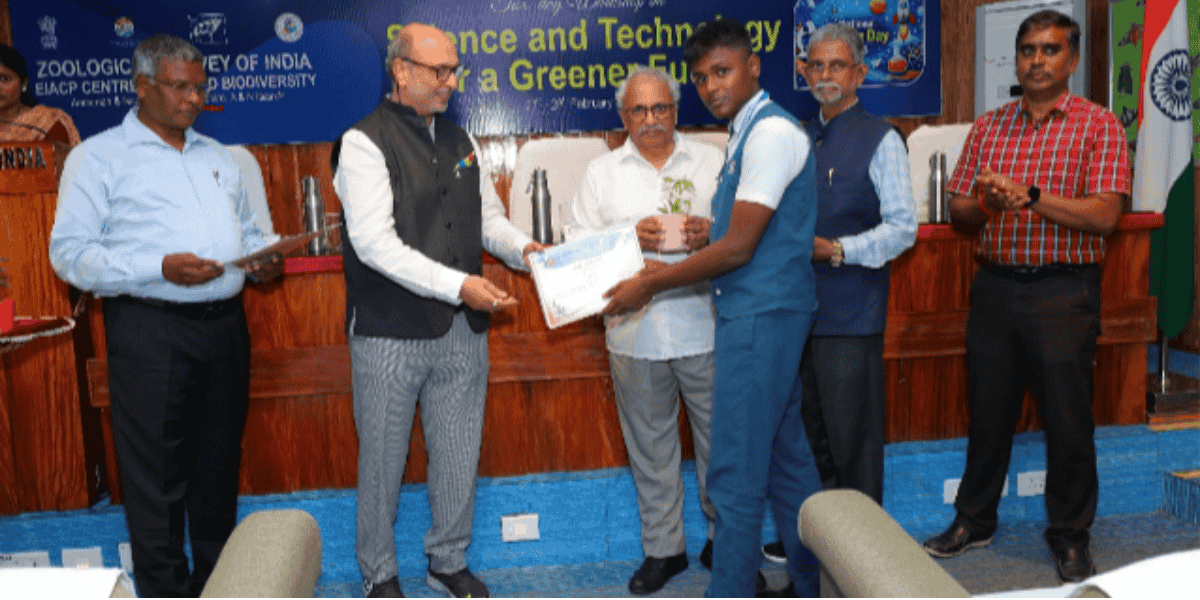
Discussions on the role of science and technology in addressing environmental challenges took centre stage as a two-day workshop organised by the Zoological Survey of India, Andaman and Nicobar Regional Centre, concluded in Sri Vijaya Puram. The programme brought together students, teachers, and trainees for structured interactions aimed at building scientific understanding and environmental awareness.
The workshop, titled Science and Technology for a Greener Future, featured eight expert lectures alongside sessions focused on skill development and capacity building. A total of 76 participants attended the programme, representing a cross-section of educational institutions from the islands and beyond. Participants included students and faculty from Jawaharlal Nehru Rajkeeya Mahavidyalaya, Government Boys Senior Secondary School, Government Model Senior Secondary School, Kamaraj English Medium School, Sagritara School, Tagore Government College of Education, Andaman College, Andaman Law College, and Pondicherry University, along with trainees enrolled under the Green Skill Development Programme.
The sessions examined how scientific research and technological innovation can contribute to sustainable development, particularly in ecologically sensitive regions. Topics covered during the expert lectures spanned biodiversity conservation, environmental monitoring, climate change, and the application of scientific tools for informed decision-making.

Officials associated with the programme noted that the workshop was structured to move beyond theoretical discussions and encourage participants to engage critically with real-world environmental issues. By exposing students and teachers to interdisciplinary perspectives, the programme aimed to foster curiosity and analytical thinking around sustainability challenges.
The valedictory session highlighted the importance of continuous engagement between scientific institutions and educational communities. Speakers emphasised that initiatives of this nature help cultivate long-term interest in science while also strengthening awareness of environmental responsibility among young learners.
The Officer-in-Charge of the ZSI’s Andaman and Nicobar unit outlined that the workshop was designed to provide a comprehensive overview of current scientific thinking related to sustainable and greener futures. The eight expert lectures were delivered by scientists and academicians with experience across multiple domains, allowing participants to gain insights into both research methodologies and applied science.

Participants were encouraged to view science not only as a subject of study but as a tool for problem-solving in everyday life. The sessions underscored the relevance of scientific literacy in addressing local environmental concerns, including biodiversity loss and resource management.
Organisers indicated that the diverse participation from schools, colleges, and training programmes added depth to the discussions, enabling knowledge exchange across academic levels. The presence of trainees from the Green Skill Development Programme also reflected an emphasis on linking scientific knowledge with employable skills.
The workshop concluded with an emphasis on sustaining such outreach efforts to nurture informed and environmentally conscious citizens. Officials expressed optimism that the programme would inspire participants to pursue further engagement with science and contribute meaningfully to environmental stewardship in their respective institutions and communities.