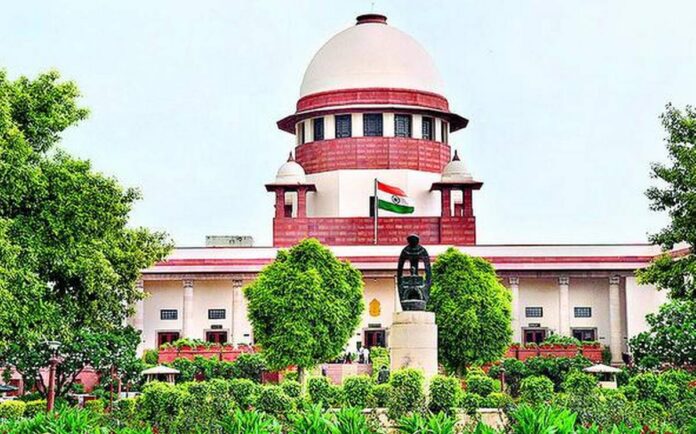
New Delhi, July 13: Amid recurring examination paper leak incidents across the country, a public interest litigation (PIL) has been filed in the Supreme Court seeking a uniform and time-bound investigation mechanism, faster trials and stricter legal action against those involved in such offences. The petition urges the Centre and all state governments to establish a Standard Questionnaire and a Special Investigation Procedure to improve the investigation and prosecution of paper leak cases across India.
The PIL, filed under Article 32 of the Constitution by advocate Ashwini Kumar Upadhyay, has named the Union government, all states and Union Territories, and the Law Commission of India as respondents. The plea contends that repeated paper leak incidents have adversely affected lakhs of students and their families, raising concerns over the effectiveness of the existing legal framework.
According to the petition, recurring examination leaks have resulted in violations of the fundamental rights guaranteed under Articles 14, 16 and 21 of the Constitution. It argues that the continued failure to prevent, investigate and prosecute those responsible has caused financial hardship, loss of educational and employment opportunities, psychological distress and, in some cases, student suicides.

Referring to the alleged NEET paper leak of May 3, 2026, the petition states that the incident exposed systemic shortcomings in dealing with examination-related crimes. It adds that the consequences of the alleged leak remain unresolved and that adequate safeguards have not yet been implemented to prevent similar incidents in future.
The PIL seeks directions for authorities to formulate a Standard Questionnaire and a Special Investigation Procedure to ensure uniformity in investigations and expedite criminal proceedings. It also seeks assessment and confiscation of the movable and immovable properties of paper leak accused and their family members allegedly involved in the offences by invoking provisions of the Prevention of Corruption Act, Prevention of Money Laundering Act, Benami Property Act and Black Money Act, wherever applicable.
The petition further argues that despite the Public Examinations (Prevention of Unfair Means) Act, 2024, being in force since June 2024, paper leak incidents have continued while the alleged masterminds have largely escaped effective investigation. It claims the existing legal framework lacks provisions for time-bound investigation and trial, a Standard Investigation Procedure, tracing proceeds of crime, confiscating illegally acquired assets and effectively identifying those responsible.
The plea has also sought a declaration that sentences awarded in paper leak cases should run consecutively instead of concurrently to create a stronger deterrent against examination fraud.

Additionally, the petition has raised questions over whether the Supreme Court should issue guidelines to address the perceived shortcomings in the present legal framework and whether restrictions on the use of Deception Detection Tests laid down in the Selvi vs. State of Karnataka judgment require reconsideration in light of scientific advancements.
As an alternative relief, the petitioner has requested the Supreme Court to direct the Law Commission of India to examine international practices relating to the investigation of paper leak cases and submit its recommendations within three months.
The matter highlights growing concerns over examination integrity and seeks institutional reforms aimed at ensuring timely investigations, effective prosecution and stronger safeguards against future paper leak incidents across the country.