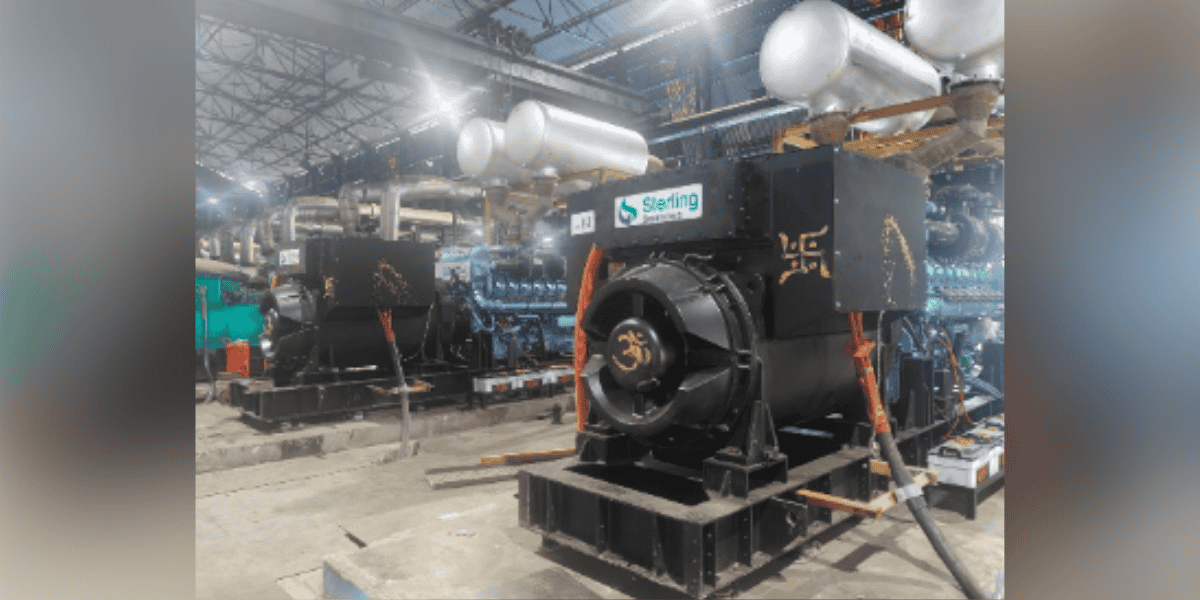
The Electricity Department of the Andaman and Nicobar Administration has announced a fresh increase in power generation capacity in Sri Vijaya Puram as part of ongoing efforts to mitigate power shortages, particularly during evening peak hours. The move follows the recent commissioning of additional in-house capacity at the Phoenix Bay Power House, taking the available generation to 41 MW.
According to the Department, sustained augmentation measures over recent weeks have already resulted in the installation and addition of 5.5 MW into the local grid. This had earlier raised the evening peak-hour capacity to 38.5 MW, providing partial relief to consumers affected by persistent power constraints. The latest commissioning of 2.5 MW of additional in-house capacity on November 23 marks another step in strengthening the system’s ability to meet rising demand.
Officials indicated that the drive to stabilise supply is continuing on multiple fronts. Revival work on a 1 MW redundant diesel generation set at the Bambooflat Power House is currently underway and is expected to be completed by December 10. Once commissioned, the total available generation is projected to reach 42 MW, further easing the mismatch between demand and supply, especially during high-consumption periods in the evenings.

The Department has reiterated that it is deploying all available resources, including diesel generator sets and renewable energy options, to ensure continuity of supply while longer-term solutions are put in place. Authorities have acknowledged that diesel-based generation carries financial and environmental costs, prompting the Administration to place renewed emphasis on decentralised and cleaner energy alternatives.
In this context, electricity consumers have been urged to adopt rooftop solar systems under the PM Surya Ghar Muft Bijli Yojana. The scheme enables households to generate their own electricity while availing central and Union Territory subsidies. Officials view widespread rooftop solar adoption as a crucial intervention to cut dependence on diesel generation, reduce load on the grid, and strengthen energy self-reliance at the household level.
The Administration has linked the push for rooftop solar to a broader strategy of de-dieselisation and greening of the islands’ energy sector. With fuel logistics and high operating costs continuing to pose challenges in island territories, renewable energy is increasingly being positioned as a long-term stabiliser rather than just a supplementary source.

The Electricity Department has stated that capacity augmentation, revival of idle assets, and promotion of renewable energy are being pursued simultaneously to address both immediate shortages and structural gaps in the power sector. The emphasis, officials said, remains on ensuring reliability, especially during peak demand hours, while preparing the system for future load growth driven by urban expansion and rising household consumption.
The Administration has renewed its assurance of sustained efforts to ensure energy security across the islands and has sought continued cooperation from consumers during the transition phase. While incremental capacity additions are expected to bring short-term relief, authorities have indicated that public participation through energy conservation and rooftop solar adoption will play a critical role in stabilising the power supply scenario in the months ahead.