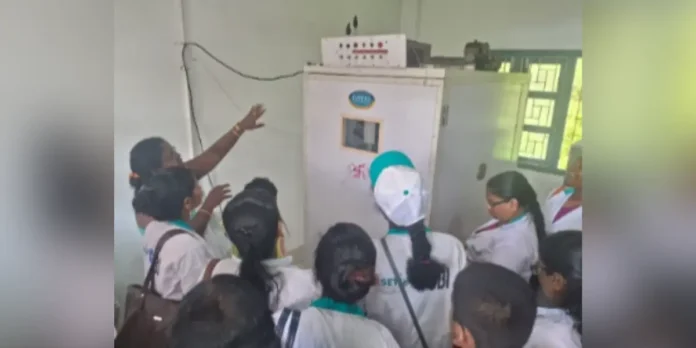
Sri Vijaya Puram, June 1: A skill development initiative aimed at promoting women’s economic empowerment has concluded in Guptapara, where 23 women from self-help groups successfully completed a specialised training programme on poultry farming.
The programme was organised jointly by the State Bank of India Rural Self Employment Training Institute (SBI RSETI), Sri Vijaya Puram, and the Department of Animal Husbandry and Veterinary Services. The initiative focused on equipping rural women with practical knowledge and skills that could help them establish sustainable livelihood opportunities in the livestock sector.
Over 12 days, participants received training covering various aspects of poultry farming, including bird management, feeding practices, disease prevention, housing requirements and business opportunities associated with poultry-based enterprises.

Officials involved in the programme said the training was designed specifically for members of National Rural Livelihood Mission (NRLM) self-help groups, recognising the important role such groups play in promoting financial inclusion and community development in rural areas.
Poultry farming has increasingly emerged as a viable source of supplementary income for rural households due to relatively low investment requirements and growing market demand for poultry products. Development agencies have often promoted poultry-based enterprises as an effective means of enhancing household incomes and improving economic resilience.
The training programme sought to bridge knowledge gaps and provide participants with practical exposure that could help them launch or expand poultry-related ventures. Experts believe that access to technical knowledge and entrepreneurial skills is crucial for improving the success rate of rural enterprises.
Dr. Shanjali served as the resource person and guided participants through different aspects of poultry farming. Sessions focused not only on technical practices but also on methods for improving productivity and maintaining healthy poultry stock.
The programme attracted women from different self-help groups operating in the Guptapara area. Participants were encouraged to view poultry farming as a potential business opportunity capable of generating regular income while contributing to household financial stability.
At the conclusion of the programme, certificates were distributed to successful participants during a valedictory function. The event also highlighted the broader objective of encouraging women to pursue self-employment and become economically independent.
Community leaders emphasised the importance of skill-based training in creating sustainable livelihood opportunities, particularly in rural areas where employment options may be limited. Such initiatives are increasingly viewed as important tools for strengthening local economies and empowering women through entrepreneurship.

Officials noted that women-led enterprises have demonstrated significant potential in contributing to rural development, particularly when supported by training, access to credit and institutional guidance. Programmes targeting self-help groups are often considered effective because they combine skill development with community-based support systems.
The successful completion of the poultry farming course is expected to encourage more women to explore opportunities in the livestock sector. Organisers expressed hope that participants would utilise their newly acquired knowledge to establish income-generating activities and contribute to the economic development of their communities.
With growing emphasis on entrepreneurship and rural livelihoods, similar training programmes are likely to play an important role in expanding self-employment opportunities and strengthening women’s participation in local economic activities across the Islands.