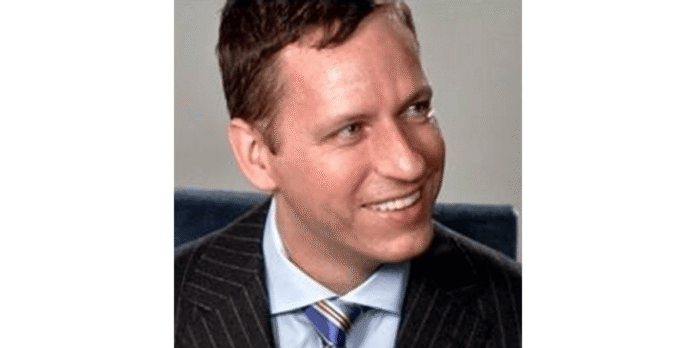
In a world increasingly shaped by inequality, discontent, and debt, billionaire investor Peter Thiel, the co-founder of PayPal and Palantir, has reignited a debate about whether capitalism still works for young people. Known as one of Silicon Valley’s most contrarian thinkers, Thiel’s recent reflections have struck a chord with a generation feeling left behind by the economic system that enriched their parents.
The discussion resurfaced after a 2020 email from Thiel to Facebook executives, including Mark Zuckerberg and Sheryl Sandberg, went viral. In it, Thiel urged them not to dismiss young people’s growing attraction to socialism as ignorance or entitlement. Instead, he argued, the trend should be seen as a warning that capitalism, in its current form, was failing to deliver fairness or opportunity.
“When 70 percent of millennials say they are pro-socialist,” Thiel wrote, “we need to do better than simply dismiss them. We should try to understand why.” His words, now circulating widely after the election of self-proclaimed democratic socialist Zohran Mamdani as New York’s mayor, read like prophecy in an era of mounting frustration over debt, housing, and stagnant wages.
Speaking about the email recently, Thiel explained that his concerns date back over a decade, when he launched the Thiel Fellowship in 2010, paying students to drop out of college to pursue ideas outside traditional academia. “The one broad policy point I kept hammering,” he said, “was the runaway student-debt problem.”
Thiel argues that student debt is not just a financial issue, it’s a symbol of a deeper generational breakdown. “If you graduated in 1970 with no student debt, compare that to the millennial experience,” he said. “Too many go to college, learn little, and end up with crushing debt.” He calls this a rupture in what he terms the “generational compact”, the belief that if young people follow the same path as their parents, they will prosper.
But that compact, Thiel says, no longer holds. “Housing is way more expensive. It’s much harder to get a house anywhere the economy is actually doing well,” he noted. With restrictive zoning laws and soaring real estate prices benefiting older property owners, Thiel argues that young people are being systematically excluded from ownership and stability. “If you proletarianize the young people,” he warned, “you shouldn’t be surprised if they eventually become communist.”
This, Thiel contends, is not about ideology but survival. National student debt in the U.S. has ballooned from $300 billion in 2000 to over $2 trillion today, a trajectory he calls “exponential and unsustainable.” Housing costs, meanwhile, have risen so sharply that homeownership for millennials feels out of reach even for those with stable jobs.

Thiel remains skeptical of socialism as a solution, but he insists its appeal is understandable. Responding to questions about Mamdani’s victory, he said: “I don’t think socialism has solutions to these problems. You can’t socialize housing. If you impose rent controls, you’ll end up with even less housing and higher costs.”
Still, he acknowledged that the socialist surge at least addresses what the political mainstream has ignored. “To Mamdani’s credit, he talked about these problems,” Thiel said. “There’s been a failure of the center-left and center-right establishment to even talk about them.”
For Thiel, the real crisis is a collapse of belief in capitalism’s fairness. “Young people are not necessarily pro-socialist,” he explained. “They’re just less pro-capitalist than they used to be. If capitalism looks like an unfair racket, you’ll be much less supportive of it.”
In his view, both policymakers and corporate leaders have failed to adapt to the economic realities confronting younger generations. “You’re not going to tinker with student debt at the margins and solve it,” he said. “That won’t work. Maybe we should look for solutions outside the Overton Window—even if I don’t agree with them.”
Thiel’s comments underscore an uncomfortable truth: even those who benefited most from the capitalist system now question its sustainability. His warning carries weight not only in the United States but also in countries like India, where youth unemployment, housing costs, and educational debt are emerging as flashpoints. Across cities from New York to Bengaluru, young professionals face similar struggles—rising rent, uncertain job markets, and shrinking access to property ownership.
The billionaire’s critique is not an endorsement of socialism but a call for renewal within capitalism. “The first step,” he said, “is to talk about the problems, even if you don’t yet know what to do about them.” In Thiel’s view, ignoring these issues risks accelerating the political and social backlash already visible in election results across democracies.
For many young people, his words resonate because they capture a frustration they live daily: working harder but falling further behind. Thiel’s analysis suggests that this alienation, if left unchecked, could redefine global politics in the decades ahead. “If capitalism is seen as just an excuse for people ripping you off,” he warned, “it will lose legitimacy.”
Thiel’s brand of realism, half critique, half cautionary tale, forces an uneasy question: can capitalism evolve fast enough to regain the trust of the generation it’s losing? His answer, though unsentimental, is rooted in pragmatism. “We should at least understand why young people feel this way,” he said, “because if we don’t, we’ll soon find out the hard way.”
In the end, Thiel’s argument is less about defending markets and more about saving them. For capitalism to survive, he suggests, it must once again deliver what it promised, a future worth striving for. Until it does, the world’s youth, from New York to the Andamans, may continue looking elsewhere for answers.