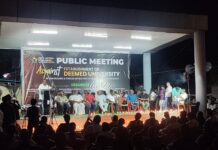
A pilot initiative aimed at improving livestock productivity and strengthening rural livelihoods was launched on December 16 with the virtual rollout of the Pashu Pushti Kit at Nabagram village in Diglipur tehsil, North and Middle Andaman. The project is intended to address nutritional deficiencies in dairy animals, a key factor contributing to infertility and reduced milk production in the islands.
The pilot was launched under the Department of Animal Husbandry and Veterinary Services and focuses on providing a specially designed nutritional supplementary kit to dairy farmers in remote areas. Officials indicated that the initiative is expected to enhance both the quality and quantity of milk produced, while improving the economic returns for farmers.
During the launch, emphasis was placed on the potential for scaling up the project if the pilot demonstrates positive results. The administration indicated that successful implementation could lead to expansion of the scheme to all milk-producing villages across the islands, with financial benefits from improved productivity intended to reach farmers directly.

The initiative is based on findings from extensive field surveys conducted through mass infertility treatment camps held between June and September 2025. Data from 168 camps revealed that malnutrition accounts for nearly 24 percent of infertility cases among examined cattle across the islands. The problem was found to be particularly acute in North and Middle Andaman, where close to half of the infertility cases were linked to nutritional deficiencies.
Out of 4,917 animals examined across 174 villages spanning North, Middle and South Andaman as well as Campbell Bay, 1,140 cases were attributed to malnutrition. Officials estimate that addressing infertility through improved nutrition could add approximately 15 lakh litres of milk annually to the islands’ existing production levels.
The Pashu Pushti Kit has been prepared using existing stocks of quality supplements and includes chelated mineral mixtures, mineral blocks for licking, ayurvedic stomachic and appetite stimulant powder, probiotics or liver tonics, protein extracts or calcium supplements, and concentrated feed for mixing. Each kit costs around Rs 210, excluding stock medicines, making it a relatively low-cost intervention.

Nabagram village was selected for the pilot due to its remote location, limited access to concentrate feed and supplements, and a sizeable breedable cattle population. The village has around 191 cattle and 89 farmers who already supply milk to ANIIDCO, allowing for systematic monitoring of outcomes through daily milk collection data.
Officials noted that correcting nutritional deficiencies can help bring infertile cows back into the production cycle, increase the number of milch animals and significantly enhance milk yield and quality. The initiative is positioned as part of a broader effort to make dairy farming more sustainable and remunerative in the islands.
The pilot launch marks a targeted approach to addressing structural challenges in the livestock sector, with officials indicating that evidence-based interventions such as Pashu Pushti Kit could play a key role in strengthening rural livelihoods in geographically isolated regions.