A district-led initiative aimed at strengthening livelihoods and value addition in the coconut sector has been launched in Car Nicobar, with a structured training and mentoring programme designed to equip tribal women with modern tools and skills for producing high-quality virgin coconut oil at the household level.
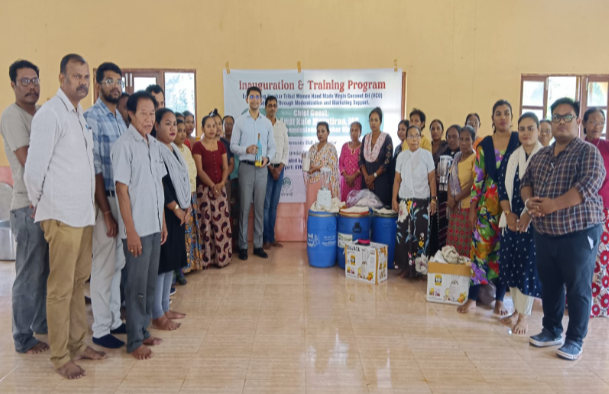
The programme was initiated at the Small Lapathy Community Hall, marking the start of a three-month training and mentoring phase focused on improving production techniques while maintaining traditional methods and adherence to Geographical Indication parameters associated with Nicobari virgin coconut oil. The initiative forms part of an effort by the district administration to enhance income opportunities for tribal communities through value-added local products.
As part of the rollout, the first batch of 30 women from Self-Help Groups in Small Lapathy and Sawai villages has been formally inducted into the programme. The participants will undergo hands-on training covering improved processing practices, quality control measures and hygiene standards, alongside mentoring support aimed at ensuring consistency and scalability in production.
The initiative is being implemented under the administrative leadership of the Nicobar district administration, with financial and institutional support from NABARD and ITDP Nicobar District. On-ground facilitation and training support are being managed by CFBT Education Services, which is responsible for coordinating capacity-building activities with the women producers.
During the programme launch, a new brand identity was introduced for the community-produced virgin coconut oil, reflecting its origin as a locally made Nicobari product prepared within village households. The branding is intended to help distinguish the product in the market and create recognition for tribal-made coconut oil rooted in traditional practices.
District officials interacting with the women producers reviewed the challenges faced in traditional coconut oil extraction, particularly in terms of labour intensity, consistency and access to appropriate tools. The administration indicated that gaps in equipment and processing infrastructure identified during these interactions would be addressed to ease production and improve efficiency, while ensuring that traditional knowledge systems are preserved.
Beyond the initial training phase, the initiative is structured as part of a longer 15-month project cycle, under which successive batches of women will receive continued mentoring and technical guidance. Officials said this sustained approach was necessary to move beyond one-time interventions and enable producers to achieve stable output levels and reliable quality standards.
Market linkage is a key component of the programme, with the district administration indicating its intent to support access to both local and wider markets, subject to consistent quality and supply. Tourism-linked demand, retail outlets and distribution channels are among the avenues being explored to ensure that the women-led production units are commercially viable.
Coconut cultivation and processing have long been integral to the Nicobarese way of life, but limited access to value addition and organised markets has constrained income potential. By combining traditional practices with structured training, branding and institutional support, the administration aims to reposition virgin coconut oil as a premium community-produced product.
Officials said the initiative reflects a shift towards livelihood models that are community-led, culturally rooted and economically sustainable. If successful, the programme could serve as a template for similar interventions across other tribal regions of the islands, linking indigenous skills with contemporary market opportunities.