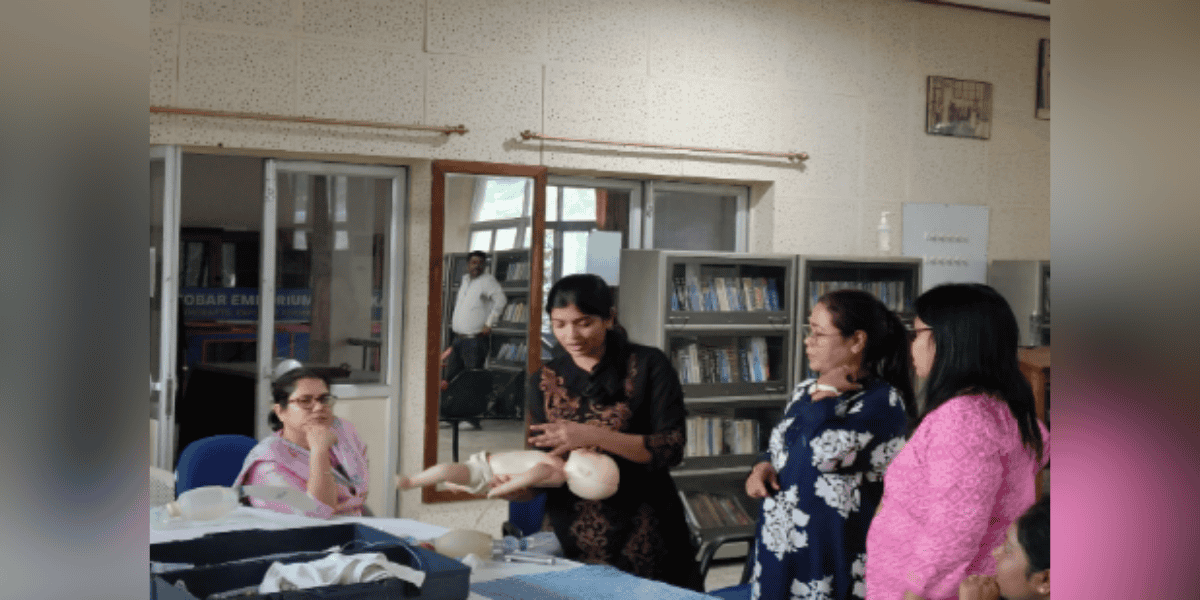
A one-day training session on comprehensive newborn birth defect detection under the Rashtriya Bal Swasthya Karyakram (RBSK) was held on 13 November for Medical Officers and Nursing Officers at the Directorate of Health Services. The programme focused on strengthening early screening practices across health facilities to reduce long-term disability and improve survival outcomes among newborns.
Inaugurating the session, Health Services Director Suja Antony called on participants to prioritise newborn screening as a critical step in preventing severe complications. She stressed that timely detection, followed by appropriate referral and intervention, plays a key role in enhancing the quality of life for affected children and reducing the burden of preventable disabilities.
Paediatric specialists Pragathesh, Head of the Paediatrics Department at ANIIMS, and Ritu Singh, Professor of Paediatrics at ANIIMS, attended as guests of honour. Both emphasised the importance of capacity building at the primary and secondary healthcare levels to ensure uniform implementation of RBSK protocols across the Islands.
The training covered major categories of birth defects that RBSK aims to identify, including physical abnormalities such as cleft lip, cleft palate, and limb deformities; chromosomal disorders such as Down syndrome; and functional defects, particularly congenital hearing loss and congenital cataract. Participants were also briefed on metabolic and endocrine conditions like inborn errors of metabolism and haemoglobinopathies, which require early detection due to their potential for long-term developmental consequences.

Sessions further explored neurodevelopmental disorders that may manifest early in infancy, highlighting the need for structured developmental screening. Given the high-risk nature of preterm births, the training also addressed complications related to prematurity, reinforcing the importance of continuous postnatal monitoring.
A total of 23 healthcare personnel from various institutions across the Islands took part in the programme. Trainers underscored practical approaches to identifying early warning signs, conducting systematic assessments, and ensuring timely documentation and referral through RBSK mechanisms.
Officials noted that improving frontline capacity is essential for expanding the reach of the “4D” screening approach under RBSK—birth defects, developmental delays, deficiencies, and diseases. The initiative aims to ensure that every newborn receives early and comprehensive health screening, regardless of geographic or socioeconomic barriers.
The event concluded with discussions on strengthening coordination between field teams, tertiary care centres, and RBSK nodal units to ensure continuity of care from detection to treatment. Participants acknowledged the need for regular training sessions to maintain consistent standards and keep pace with emerging diagnostic techniques.
The programme marked another step toward enhancing child health services in the Islands and supporting the long-term goals of early intervention and disability prevention under the national child health framework.