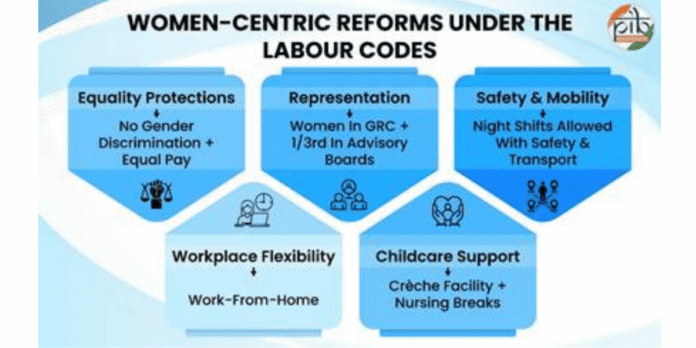
The implementation of India’s four new labour codes marks a significant shift in the country’s labour regulation framework, with the government stating that the reforms strengthen women’s rights through enhanced maternity benefits, equal pay provisions, workplace safety, and greater flexibility at work.
Earlier this month, India rolled out the consolidated labour reforms through four legislations, the Code on Wages, 2019; the Industrial Relations Code, 2020; the Code on Social Security, 2020; and the Occupational Safety, Health and Working Conditions Code, 2020. Together, these codes aim to modernise labour laws while ensuring equality and improved working conditions for women across sectors.
According to an official statement, women form a vital and expanding segment of the workforce, and the new codes are designed to create a safer, more inclusive and enabling work environment. The reforms focus not only on safeguarding rights but also on expanding opportunities and participation, including in sectors and shifts previously restricted.
Under the Industrial Relations Code, 2020, establishments are required to ensure adequate representation of women in Grievance Redressal Committees. The representation must not be less than the proportion of women in the total workforce, ensuring their voices are included in dispute resolution mechanisms.

The Code on Social Security, 2020, provides substantial maternity benefits. Women employees who have worked for at least 80 days in the 12 months preceding the expected date of delivery are entitled to 26 weeks of paid maternity leave. In addition, commissioning mothers through surrogacy and women adopting children below three months of age are eligible for 12 weeks of maternity benefits from the date the child is handed over.
The law also includes provisions for work-from-home options, nursing breaks for breastfeeding mothers, and the establishment of creche facilities, aimed at supporting work-life balance.
A notable feature of the new framework is the removal of broad restrictions on the nature and timing of work for women. Women are now permitted to work in all establishments and undertake all categories of work, including night shifts, subject to their consent. Employers are mandated to ensure safety measures, facilities, and suitable transportation for women working before 6 a.m. or after 7 p.m.
The Code on Wages, 2019 further reinforces gender equality by prohibiting discrimination on the grounds of gender in recruitment, wages, and conditions of employment.
The government stated that taken together, these measures strengthen women’s economic empowerment and contribute to a more balanced and resilient labour ecosystem.