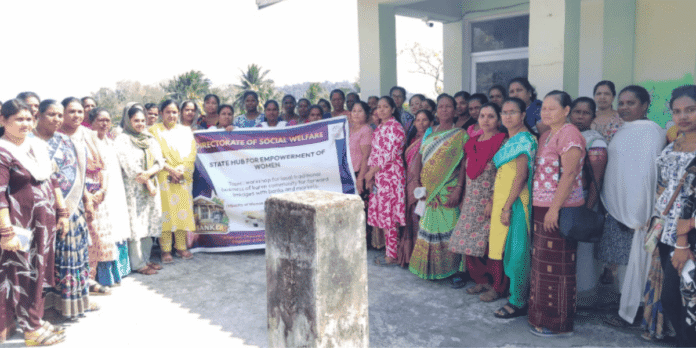
Efforts to strengthen traditional livelihoods of the Karen community in North and Middle Andaman received a focused push through a three-day workshop held in Mayabunder, aimed at improving market access, financial linkages and entrepreneurship opportunities for local youth and small business operators.
The programme was conducted at the Mayabunder Panchayat Hall by the State Hub for Empowerment of Women (SHEW) under the Directorate of Social Welfare. It centred on supporting local traditional businesses by facilitating improved connections with markets and banking institutions, with the objective of enhancing income prospects and sustainability of community-based enterprises.
Resource persons from multiple departments and technical backgrounds participated in the workshop, reflecting an inter-departmental approach to livelihood promotion. Those involved in the sessions included the State Mission Coordinator of SHEW, a Technical Assistant associated with coir-related activities, an Industries Promotion Officer and a Project Coordinator linked with community-level initiatives in Mayabunder. The discussions were oriented towards identifying self-employment avenues based on locally available resources and traditional skills of the Karen community.

The Karen community, known for its distinctive cultural and occupational traditions in parts of the Andaman and Nicobar Islands, has historically engaged in activities linked to forest-based resources, handicrafts and other small-scale enterprises. The workshop placed emphasis on aligning such traditional practices with formal market systems and institutional support, including access to banking services, which are often seen as critical to scaling up micro and small enterprises.
Sessions during the programme highlighted the scope for entrepreneurship among local youth, particularly in areas where traditional knowledge and local resource availability intersect. Participants were encouraged to explore business models that build on existing skills while adapting to market demand and quality standards. The focus on bank linkages formed a key component, as access to formal credit and financial services is viewed as essential for expansion, procurement of raw materials and investment in equipment or value addition.
By bringing together officials connected with social welfare, industry promotion and technical sectors, the workshop sought to bridge gaps between community-level enterprises and institutional mechanisms. Such linkages are often considered necessary in remote regions where producers may face constraints in marketing, transport, credit access and exposure to broader markets.

The programme concluded with an emphasis on collective efforts among stakeholders to support the economic activities of the Karen community in Mayabunder. The approach outlined during the workshop pointed to the need for continued coordination between government departments, financial institutions and community groups to translate training and awareness into tangible business outcomes.
The initiative forms part of broader efforts to promote sustainable economic development in rural and semi-rural areas of the islands by leveraging local skills and resources. By focusing on traditional businesses and entrepreneurship among youth, the workshop aligned livelihood support with cultural continuity, while also encouraging integration with formal economic systems.
Such programmes are being positioned as a means to reduce livelihood vulnerabilities, diversify income sources and strengthen local economies in geographically remote areas. The Mayabunder workshop highlighted the role of capacity-building and institutional linkages in enabling community-based enterprises to move beyond subsistence levels towards more structured and market-oriented operations.