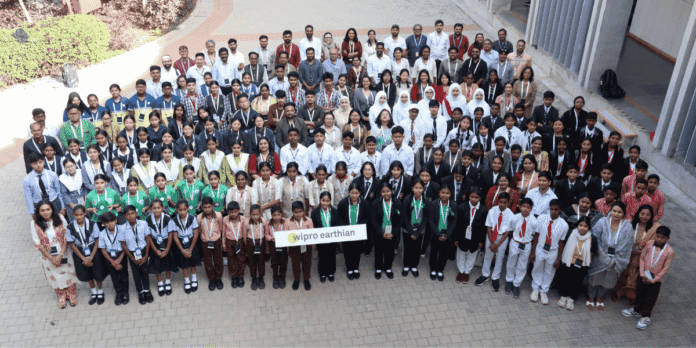
A government school from Little Andaman has brought national recognition to the Andaman & Nicobar Islands after being named among winners at the prestigious Wipro earthian Awards 2025, a programme that celebrates sustainability education and student-led environmental action across India. PM Shri Government Senior Secondary School, R K Pur, emerged as one of only 25 winning teams selected from over 2,000 submissions nationwide, highlighting how grassroots ecological awareness from a remote island community can stand alongside leading institutions in the country.
The award was presented at the 15th edition of the Wipro earthian Awards held at Azim Premji University in Bengaluru. The initiative encourages schools and colleges to engage deeply with real-world environmental challenges through hands-on learning, critical thinking and community involvement. This year’s entries focused on biodiversity, waste and water, and were evaluated by an independent jury. The Little Andaman team stood out for linking environmental protection with cultural understanding and local ecological knowledge.

Students from RK Pur conducted surveys among people from diverse backgrounds to explore the idea of future custodianship of nature, drawing particular attention to the sustainable lifestyles of Little Andaman’s Indigenous communities, who have lived in balance with nature for generations. Their project examined how traditional practices reflect ecological harmony and how modern development patterns, especially monoculture plantations, pose risks to fragile island ecosystems. By documenting community perspectives through interviews, the students turned local voices into part of their research narrative.
Creative communication formed a major part of their work. The team designed tools such as an Eco-Actions Snake and Ladder game and a Biodiversity Card Game to make environmental learning interactive. A wall mural and a pollinator garden translated ecological themes into visible, living symbols within the school space. Role-plays were used to explain environmental threats, particularly from large-scale Arecanut and Red Oil Palm plantations, helping peers understand how monoculture can affect biodiversity, soil health and traditional land use. Their project underlined both the ecological fragility of Little Andaman and the cultural loss Indigenous communities may face when natural systems are disrupted.

Certificates and cash prizes were presented to winners by leaders from the Azim Premji Foundation and Wipro Foundation. Organisers emphasised that the strength of the earthian programme lies in connecting sustainability concepts to lived realities, whether through neighbourhood biodiversity, local water sources or everyday waste practices. They noted that students across the country are moving beyond awareness to sustained engagement, applying curiosity and empathy to environmental problem-solving.
Since its launch in 2011, Wipro earthian has engaged more than 51,000 schools, 210,000 students and 41,000 teachers, building a wide network of sustainability educators and partner institutions. The recognition for RK Pur school signals how even geographically distant island schools are contributing to national conversations on climate resilience and ecological responsibility. For the Andaman & Nicobar Islands, where environmental balance is directly linked to livelihoods and cultural identity, the award reflects how young islanders are stepping forward as informed voices for conservation and coexistence.