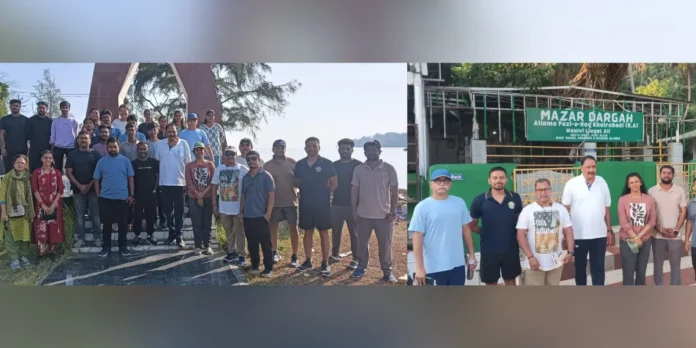
A heritage walk titled “Kaali Paani Trail” was conducted across key historical locations in the Andaman and Nicobar Islands, bringing together students, tour operators, and heritage enthusiasts to revisit the region’s colonial past.
Organised by the Indian National Trust for Art and Cultural Heritage Andaman and Nicobar Chapter in collaboration with the Department of Art and Culture, the walk covered a distance of three kilometres. It commenced at 5:30 am from the Dargah of Allama Fazl e Haq Khairabadi and concluded at the Battle of Aberdeen memorial.

Participants moved through a series of historically significant sites, including the Ladies Convict Barrack, Blessington, Government Press, Jawaharlal Nehru Rajkeeya Mahavidyalaya, and the location associated with the signing of the instrument of surrender. The route connected multiple landmarks that reflect the layered history of the islands.
Students from the Tourism Department of Jawaharlal Nehru Rajkeeya Mahavidyalaya joined the walk under the guidance of Rajasekaran. Members of the Andaman Association of Tour Operators, including Vinod, Mohammed Rafiq, and Biswajit, as well as representatives of the Andaman Nicobar Tour Operators Association, including Salman and N B Chetri, also took part. Participants included individuals from the Indian Navy, Sanjay Solwat and Sandeep Malik, along with school teachers from Kendriya Vidyalaya.
Chanchal Singha Roy, a national award-winning teacher, participated in the walk and narrated a short story titled “The Keeper of Silver Braid,” focusing on the importance of preserving cultural heritage. The narration highlighted the role of storytelling in keeping historical memory alive.

The walk was led by Samhita Veda Acharyaa, Convenor of the Indian National Trust for Art and Cultural Heritage Andaman and Nicobar Chapter. The initiative aimed to create awareness about heritage conservation while encouraging community engagement with historical sites.
The event reflected continued efforts to connect people with the region’s past through experiential learning and public participation.