Jerusalem, April 9: Israel Defence Forces (IDF) confirmed the killing of Ali Yusuf Harshi, personal secretary to Hezbollah Secretary-General Naim Qassem, in Beirut, intensifying ongoing military operations against the Lebanese militant group. Harshi, also a nephew of the Hezbollah chief, played a key role in managing and securing Qassem’s office, according to IDF sources.
Alongside Harshi’s elimination, the IDF reported coordinated strikes on two key crossings used by Hezbollah to move weapons south of the Litani River, as well as 10 weapons storage sites, launchers, and command centres in southern Lebanon. These operations were carried out as part of the largest coordinated strike in Lebanon since the commencement of Operation Roaring Lion.

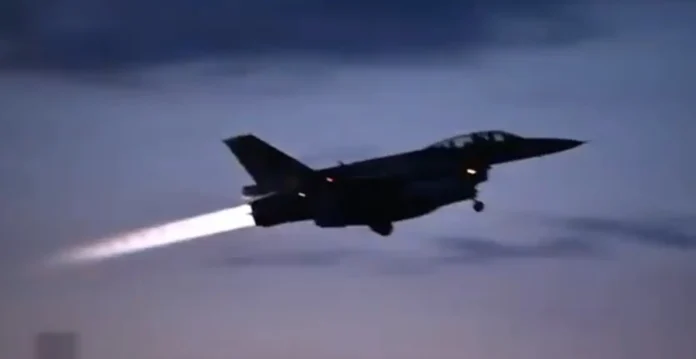
In a statement posted on X, the IDF outlined that the 10-minute operation targeted more than 100 Hezbollah headquarters, military arrays, and command-and-control facilities across Beirut, Beqaa, and southern Lebanon. Among the sites hit were intelligence command centres used for planning attacks, firepower infrastructure, naval arrays, assets of Hezbollah’s Radwan Force, and elite aerial units.
The strikes follow heightened tensions in the region and come a day after the United States and Iran announced a two-week ceasefire agreement. Earlier reports indicated the IDF also killed Muhammad Samir Muhammad Washah, a Hamas operative disguised as a journalist, who was involved in weapons production and the planning of attacks against IDF troops in Gaza.
IDF Chief of the General Staff, LTG Eyal Zamir, overseeing operations against Hezbollah, stated that Israel will continue to act decisively against the group while ensuring the security of northern Israeli residents. “We will not compromise the security of the residents of northern Israel. We will continue to strike with determination,” Zamir said.
The IDF emphasized that its campaign targets Hezbollah’s operational and logistical capabilities, aiming to degrade the group’s ability to plan and execute attacks. The airstrikes focused on disabling command centres, weapons depots, and elite operational units, signaling a strategic effort to curtail Hezbollah’s reach in Lebanon.

International observers have noted that the strikes could escalate tensions in the region, with Israel positioning its operations as a defensive measure. The IDF confirmed that these actions are part of a broader strategy to use every operational opportunity to counter perceived threats from Hezbollah and allied groups.
Authorities in Lebanon have not yet provided detailed casualty figures or responses to the IDF operations. Regional monitoring continues as the situation evolves.
The IDF’s announcement underscores the ongoing conflict dynamics between Israel and Hezbollah, highlighting the military capabilities Israel continues to deploy in Lebanon. Officials confirmed that follow-up operations and intelligence monitoring are ongoing.



