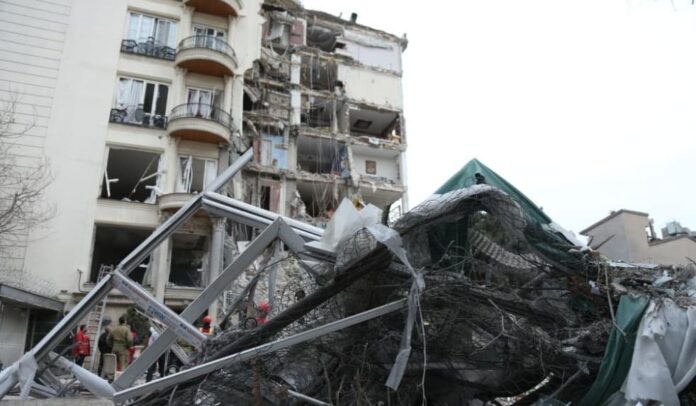
A missile launched from Iran struck Tel Aviv on Tuesday, injuring at least six people and causing damage to residential buildings and vehicles, as hostilities between the two sides entered their 25th day.
Israeli authorities reported that multiple explosions were heard across the city, with eyewitnesses describing thick plumes of smoke rising from both northern and southern parts of the commercial hub. Emergency teams were deployed to several locations following the impact.
According to Israel’s Army Radio, citing security officials, the projectile was believed to be a cluster-type missile carrying multiple bomblets, each weighing around 100 kg. These bomblets or their fragments reportedly struck multiple sites, increasing the extent of damage.

At one impact site in northern Tel Aviv, the missile landed between buildings, generating a powerful blast wave that caused significant structural damage to at least three buildings. Miki David, commander of the Tel Aviv district in the Home Front Command, stated that while the blast caused extensive external damage, shelters within the buildings remained intact, and occupants inside were not harmed.
Visuals circulating on social media indicated the formation of a crater at one of the impact sites, reflecting the intensity of the explosion. The Israeli military confirmed that search and rescue teams were actively operating across several affected areas in central Israel.
The Magen David Adom ambulance service reported that six individuals sustained light injuries and did not require hospitalisation. Emergency services continued to assess the situation and assist residents in impacted zones.
Air raid sirens were triggered multiple times across Israel overnight and into Tuesday morning as missile fire from Iran continued. The latest alerts were activated in southern regions, including Dimona, where a key nuclear facility is located, indicating the geographical spread of the threat.
The strike occurred against the backdrop of escalating tensions in the region, with the conflict now in its fourth week. The situation remains volatile despite claims of ongoing negotiations by United States President Donald Trump, which were rejected by Iran as unfounded.
In parallel developments, reports citing senior defence officials indicated that the United States is evaluating the possible deployment of airborne troops to support military operations in Iran. The potential deployment could involve the US Army’s 82nd Airborne Division’s Immediate Response Force, a brigade of approximately 3,000 personnel capable of rapid mobilisation.

The report also outlined alternative options under consideration, including the use of around 2,500 troops from the 31st Marine Expeditionary Unit, currently en route to the Middle East. These forces could be tasked with strategic operations such as securing key infrastructure, including Kharg Island, a major oil export hub.
Officials noted that no final decision has been taken regarding troop deployment, and no orders have been issued by the Pentagon or US Central Command.
The broader conflict has already had significant global repercussions. The US Central Command stated that more than 9,000 strikes have been carried out in Iran since February 28, including operations that damaged or sank over 140 Iranian naval vessels. These developments have disrupted global shipping routes, driven up oil prices, and contributed to economic instability.
The latest missile strike on Tel Aviv underscores the continuing escalation in the region, with civilian areas increasingly affected as military operations expand.