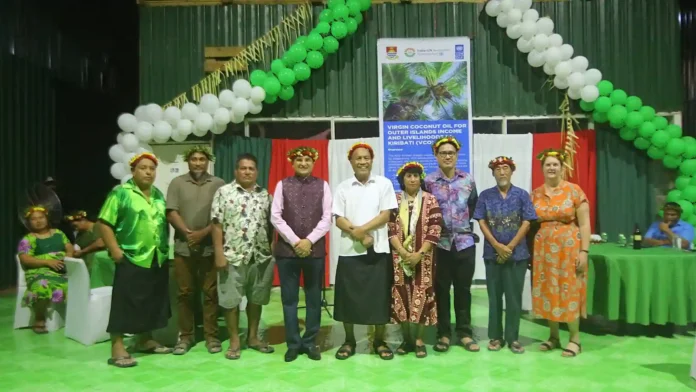
South Tarawa, Sept. 5: India has strengthened its development partnership with Kiribati through the launch of a Virgin Coconut Oil (VCO) Project designed to expand value addition in the country’s coconut sector, generate new livelihood opportunities and support sustainable economic growth across rural communities.
The initiative, launched in South Tarawa, is backed by US$900,000 from the India-UN Development Partnership Fund and is being implemented by the United Nations Development Programme (UNDP). The project aims to enhance the economic value of Kiribati’s abundant coconut resources by promoting local processing instead of relying primarily on raw exports.
Under the programme, India will support the establishment of Virgin Coconut Oil processing plants on the islands of Nonouti and Teraina. The project also includes training and capacity-building initiatives intended to equip local communities with the skills needed to manage processing operations and strengthen the sector over the long term.

According to the Indian High Commission in Fiji, the initiative is expected to create new economic opportunities for farmers, women’s cooperatives and rural communities by enabling higher-value coconut products to be produced within Kiribati. The mission said the project reflects India’s continued commitment to South-South cooperation, locally driven development and livelihood-focused partnerships in the Pacific region.
The launch ceremony was attended by Kiribati President Taneti Maamau, senior government representatives, officials from the UNDP, industry stakeholders and community members, highlighting broad institutional support for the initiative.

Addressing the gathering, Indian High Commissioner Suneet Mehta said local processing would allow a larger share of the economic value generated from coconuts to remain within Kiribati. He noted that the project is expected to benefit farmers, suppliers, small businesses, women, young people and communities in the country’s outer islands. He also said development initiatives are most effective when they are locally owned, managed and designed around local needs.
Tangariki Reete, Kiribati’s Minister for Tourism, Commerce, Industry and Cooperatives, said the project supports the country’s efforts to diversify its economy while strengthening the coconut industry. She stated that the initiative aligns with the Kiribati 20-Year Vision and the National Development Plan 2024–2027, translating government policy into practical action aimed at building a wealthier, healthier and more peaceful nation.
The minister also highlighted the importance of capacity building and sustained investment in the coconut sector as Kiribati seeks to move beyond traditional copra production through value addition and product diversification. UNDP said the initiative directly supports national priorities to expand the coconut industry’s contribution to economic development and rural livelihoods.