New Delhi, June 27: India has commissioned the world’s first hydrogen production facility based on the Copper-Chlorine (Cu-Cl) Thermochemical Cycle using nuclear process heat, marking a major milestone in the country’s clean energy and advanced nuclear technology programme.
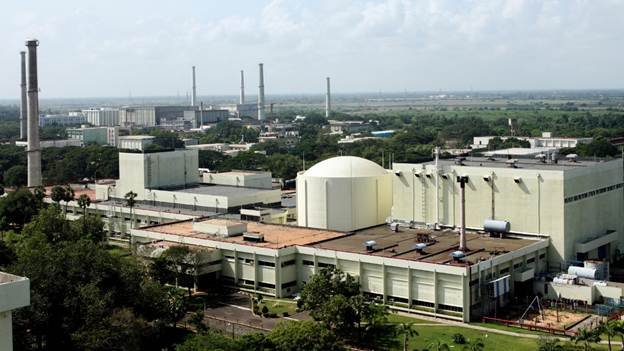
The Department of Atomic Energy (DAE) inaugurated the technology demonstration facility at the Indira Gandhi Centre for Atomic Research (IGCAR), Kalpakkam, where hydrogen will be produced using heat generated from the Fast Breeder Test Reactor (FBTR). The project represents a significant advancement in India’s efforts to develop carbon-free hydrogen production technologies through indigenous research.
Department of Atomic Energy Secretary and Atomic Energy Commission Chairman Ajit Kumar Mohanty inaugurated the facility in the presence of IGCAR Director Sreekumar G. Pillai.

According to the Department of Atomic Energy, the plant has been established to validate hydrogen production through the Copper-Chlorine thermochemical process developed indigenously by the Bhabha Atomic Research Centre (BARC), Mumbai. The department said the successful integration of nuclear process heat with hydrogen generation marks a technological breakthrough and creates a pathway for large-scale production of carbon-free hydrogen using advanced nuclear reactors.
Hydrogen is regarded as a key energy carrier in the global transition towards clean and sustainable energy systems. Among the various hydrogen production technologies under development worldwide, the Copper-Chlorine thermochemical cycle is considered one of the most promising because of its comparatively lower operating temperatures and higher thermodynamic efficiency.
The DAE stated that using nuclear heat from fast reactors substantially reduces dependence on fossil fuels while eliminating greenhouse gas emissions associated with conventional hydrogen production methods.
Officials said the commissioning of the facility marks the culmination of extensive research, engineering design, process development, equipment fabrication, installation, testing and commissioning jointly undertaken by scientists and engineers from BARC and IGCAR. The demonstration plant is expected to provide operational experience, support optimisation of the Copper-Chlorine process and facilitate future research for commercial-scale deployment of nuclear-assisted hydrogen production technologies.
Addressing the gathering, Ajit Kumar Mohanty said integrating nuclear energy with emerging clean energy technologies such as hydrogen production offers a strategic pathway towards a sustainable energy future. He noted that nuclear power can simultaneously provide reliable carbon-free electricity and high-temperature process heat, making it suitable for large-scale hydrogen production while strengthening India’s energy security and decarbonisation objectives.
Mohanty also congratulated the scientific, engineering and technical teams of BARC and IGCAR for translating an advanced scientific concept into an operational facility, describing the achievement as a reflection of India’s growing capabilities in advanced nuclear technologies and clean energy systems.

IGCAR, established in 1971 under the Department of Atomic Energy, has led India’s Fast Breeder Reactor programme for over four decades. The centre designed, constructed and operated the Fast Breeder Test Reactor, which has supported the development of fuels, materials and sodium technologies and laid the technological foundation for India’s fast reactor programme, including the 500 MWe Prototype Fast Breeder Reactor.
Sreekumar G. Pillai said the achievement builds on decades of technological expertise developed through the Fast Breeder Test Reactor programme and demonstrates the versatility of advanced nuclear systems in supporting India’s clean energy transition and long-term energy security.
The Department of Atomic Energy said the commissioning of the facility advances the vision of Atmanirbhar Bharat by combining indigenous nuclear technology with clean hydrogen production and reinforces India’s commitment to building a sustainable, secure and low-carbon energy future.