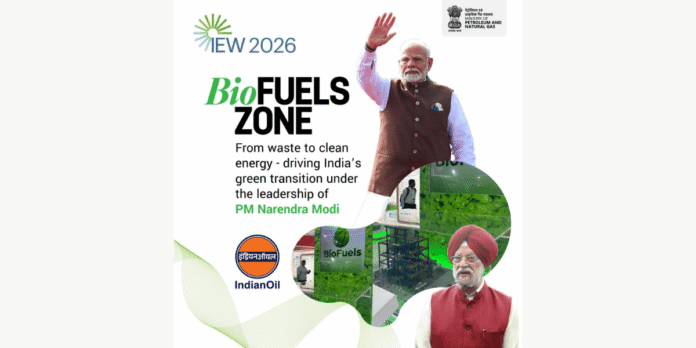
The Biofuels Zone at India Energy Week 2026 is demonstrating how India is scaling up the conversion of waste into clean energy, with the compressed biogas (CBG) sector expanding steadily across the country, Petroleum and Natural Gas Minister Hardeep Singh Puri said on Friday.
Addressing developments showcased at the event, the minister said that 133 CBG plants have already been commissioned nationwide, together accounting for a processing capacity of 926 tonnes per day of organic waste. CBG is currently available at 410 retail outlets, reflecting the growing integration of the renewable fuel into India’s energy and transport ecosystem.
According to the ministry, the expansion is set to continue, with another 83 CBG plants under construction. Once operational, these facilities are expected to add around 700 tonnes per day of additional processing capacity. The tonnes-per-day figure refers to the amount of waste feedstock, such as agricultural residue, that a plant can process daily to produce compressed biogas and organic manure.

CBG plants process a wide range of organic waste, including agricultural residue, cattle dung, municipal solid waste and sugarcane press mud. Through anaerobic decomposition, this waste is converted into biogas, which is then purified to remove carbon dioxide, hydrogen sulphide and moisture. The resulting compressed biogas contains more than 90–95 per cent methane, making it comparable to conventional compressed natural gas in terms of calorific value.
Promoted under the SATAT (Sustainable Alternative Towards Affordable Transportation) scheme, CBG is positioned as a renewable and cleaner alternative to fossil fuels for vehicles, industrial use and commercial applications. Officials said the fuel supports multiple policy objectives, including reducing pollution, cutting dependence on imported natural gas and crude oil, and encouraging waste-to-energy solutions.
In addition to producing fuel, CBG plants generate fermented organic manure as a byproduct. This byproduct can be used in agriculture to improve soil health and crop yields, adding a rural income component to the programme. The government has repeatedly emphasised that the CBG ecosystem links clean energy production with sustainable farming and responsible waste management.
Launched on October 1, 2018, the SATAT initiative aims to establish 5,000 CBG plants across the country. The programme is designed to support India’s broader goals of energy security, lower carbon emissions and circular economy practices, while also addressing the challenge of managing large volumes of organic waste.
India Energy Week 2026, being held in Goa from January 27 to 30, is India’s flagship energy exhibition and conference. The event has drawn more than 75,000 energy professionals and over 700 exhibitors from around 120 countries. It has also brought together global ministers, senior policymakers, industry leaders, innovators and investors.
The conference is focusing on how India is balancing the need for affordable and secure energy access with its decarbonisation commitments. Through discussions on strategic investments, new technologies, and global partnerships, India Energy Week 2026 is positioning the country’s energy transition, including the expansion of biofuels and CBG, as a key pillar of its long-term sustainability strategy.