Sri Vijaya Puram (Port Blair) April 9: The third day of the Innovation, Design and Entrepreneurship Bootcamp 2026 at Dr. B. R. Ambedkar Institute of Technology marked a shift towards prototyping and business development, as participants advanced from identifying problems to building structured solutions.
The day’s sessions were conducted under the theme “From Prototype to Business,” focusing on translating ideas into viable models. Experts guided participants through the practical aspects of developing prototypes and aligning them with business strategies.
Sarim Moin, Innovation Officer at the Ministry of Education Innovation Cell, and Anbumathi, Innovation Venture Catalyst and Design Thinking Expert from Wadhwani Foundation, led the sessions. They introduced participants to frameworks that support early-stage innovation and entrepreneurship, with an emphasis on applying structured thinking to real-world challenges.

The programme placed particular focus on the Lean Canvas model, enabling participants to organise their ideas into coherent business frameworks. The sessions aimed to help students understand how to define value propositions, identify customer segments, and outline revenue mechanisms within a structured format.
Organisers indicated that the shift in focus was designed to equip participants with tools required to move beyond conceptualisation and into execution. The approach encouraged students to critically evaluate their ideas and develop them into scalable solutions.
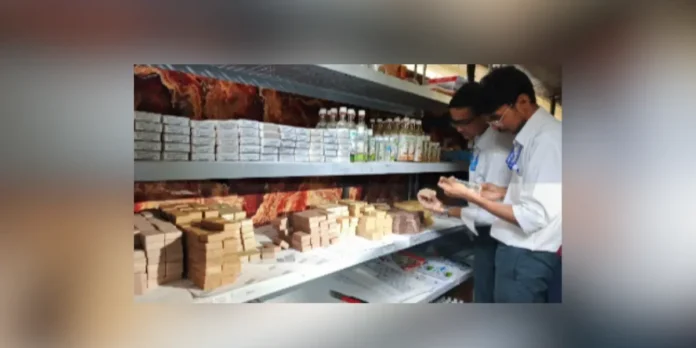
As part of the day’s activities, participants were taken on a guided start-up exposure visit to local enterprises in Sri Vijaya Puram. The visit included Ganesh Flour Mill and Andaman Organic Products at Bird Line, where students observed operational models and gained insight into functioning business environments.

The field exposure aimed to provide participants with practical understanding by connecting classroom learning with on-ground experiences. Students interacted with operational setups and observed how business strategies are implemented in real scenarios.
The third day of the bootcamp reflected a structured progression in the programme, moving participants closer to transforming ideas into actionable ventures. Organisers maintained that such experiential learning components are integral to developing entrepreneurial skills among students.
The IDE Bootcamp 2026 continues to bring together academic learning and industry exposure, with sessions designed to build capacity in innovation, design thinking, and enterprise development among participants.



