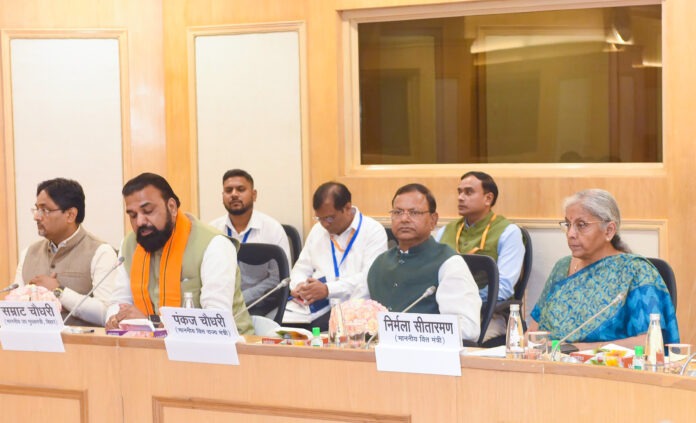
The 56th meeting of the Goods and Services Tax (GST) Council began on Wednesday with an ambitious agenda to overhaul the indirect tax framework by introducing a two-slab structure and reducing rates on more than 150 items. The two-day meeting, chaired by Finance Minister Nirmala Sitharaman and attended by state finance ministers, is being seen as one of the most significant reform discussions since GST was introduced in 2017.
According to the proposals placed before the Council, the Centre has suggested moving towards two principal tax rates of 5 per cent and 18 per cent by merging the existing 12 per cent and 28 per cent slabs into the lower brackets. A special 40 per cent rate is expected to remain in place for selecting luxury or demerit items, ensuring that revenue neutrality is preserved while providing relief to households and small businesses.
The restructuring is aimed at reducing compliance burdens, making tax administration simpler, and aligning the Indian GST system with global best practices. Finance Minister Sitharaman said the “next generation GST reforms” would make the economy more transparent and provide relief to small traders and manufacturers who often struggle with paperwork and multiple tax rates.
Among the most notable proposals is the expansion of the nil GST category to include widely consumed food products such as loose paneer, pizza bread, khakhra, chapati and roti. These items, currently taxed between 5 per cent and 18 per cent, may soon become tax-free, significantly reducing the cost burden on households. Ready-to-eat foods like paratha and parotta, now taxed at 18 per cent, are also being considered for exemption.
Other common food items including butter, condensed milk, jams, mushrooms, dates, nuts and namkeens could see a reduction in tax from 12 per cent to 5 per cent. Similarly, confectionery, ice creams, pastries and packaged breakfast cereals such as cereal flakes may shift from 18 per cent to 5 per cent. Analysts note that these cuts, if implemented, would provide relief across diverse consumer segments, from students to urban households.
The proposals also extend to consumer durables and automobiles. Entry-level passenger cars and two-wheelers, currently taxed at 28 per cent plus compensation cess, may see their rate reduced to 18 per cent. Industry observers believe this could boost sales ahead of the festive season and make personal transport more affordable for middle-class buyers.
The education sector is set to gain significantly from the proposed revisions. Items such as maps, globes, exercise books, graph notebooks, lab records and pencil sharpeners are being considered for full exemption, down from the present 12 per cent. Parents and students stand to benefit through lower back-to-school costs, particularly with the academic year beginning in many parts of the country.
If approved, the rate changes would be presented as part of the comprehensive revision expected to come into effect by September 22. While the focus is on easing burdens for small businesses and households, the Centre has also emphasised the need to maintain revenue balance for states. The GST Council, a federal body where both the Centre and the states have a say, will deliberate on whether the proposed cuts can be offset by streamlining tax administration and widening the tax base.
The reforms also carry political significance, arriving at a time when concerns have been raised about high inflation and consumption slowdown. Lower GST on essential items could provide immediate relief to households, while simplified structures could reduce compliance costs for traders, particularly in the unorganised sector.
If implemented, the two-slab model would mark a major shift in India’s indirect tax regime, creating a simpler and more consumer-friendly GST system. The meeting’s outcome will determine whether the reforms can strike the intended balance between providing relief to consumers and maintaining fiscal stability.