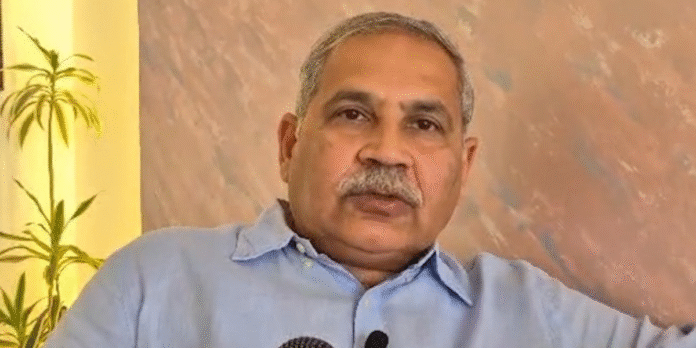
Gurugram, May 02: Major General (Retd.) Bhatia, a veteran officer of the Indian Army with over 37 years of service, has held key assignments including operations in Jammu and Kashmir and served as Defense Advisor in Pakistan. Drawing on his extensive strategic experience, he described the project as a critical step in reinforcing India’s presence in the Indo-Pacific region.
Highlighting its geopolitical importance, Bhatia pointed to the proximity of Great Nicobar Island to the strategically vital Strait of Malacca, one of the busiest shipping lanes in the world. He noted that positioning India closer to this route would significantly improve monitoring of international trade movements, particularly those involving China.
“Any ship moving from the Pacific Ocean into the Indian Ocean passes through key routes such as the Sunda Strait, Lombok Strait, or the Strait of Malacca. Strengthening our presence near these routes enhances the effectiveness of our Navy, Coast Guard, and surveillance systems,” Bhatia said.
The project includes the development of a major international transshipment container terminal, a greenfield airport, and expanded military infrastructure, including naval and air force facilities. These developments are expected to significantly boost India’s rapid response capabilities and logistical strength in the region.

Bhatia noted that the proposed transshipment terminal could handle approximately 1.62 million Twenty-foot Equivalent Units (TEUs), potentially transforming India into a major maritime hub. “Currently, nearly 75 per cent of India’s container traffic depends on foreign ports. This project will reduce that dependence and strengthen domestic capacity,” he said.
The project has come under renewed national focus following a recent three-day visit by Rahul Gandhi to the Andaman and Nicobar Islands between April 26 and 28. During his visit to Great Nicobar, Gandhi raised concerns over environmental impact, implications for local communities, and the scale of development activity.
He criticised the project as causing large scale ecological disruption and alleged inadequate public consultation, describing the situation as one of the “largest thefts of ecological property” in India. His remarks have intensified the political and public debate surrounding the project, particularly on the balance between development and environmental conservation.

Responding to such criticism, Bhatia called for political unity on national security issues, stressing that strategic infrastructure projects should receive bipartisan support and not become subjects of political contention.
“National interest must remain paramount. Projects of such importance should not be opposed for political reasons alone,” he said.
Bhatia further highlighted that the strategic importance of the Andaman and Nicobar Islands has gained renewed focus since 2018 after Narendra Modi directed comprehensive mapping and surveys of the region by the Indian Navy.
Drawing comparisons with global chokepoints such as the Strait of Hormuz, he stressed that nearly 30 per cent of global trade passes through the Strait of Malacca, making it critical for both economic and security interests.
He also noted that the project includes provisions for developing a new urban settlement for local communities while ensuring regulated and limited use of forest land, aiming to balance development with environmental considerations.
The Great Nicobar Project is increasingly being viewed as a transformative initiative that integrates economic growth, infrastructure expansion, and military preparedness, positioning India as a stronger and more self-reliant player in the Indo-Pacific region.