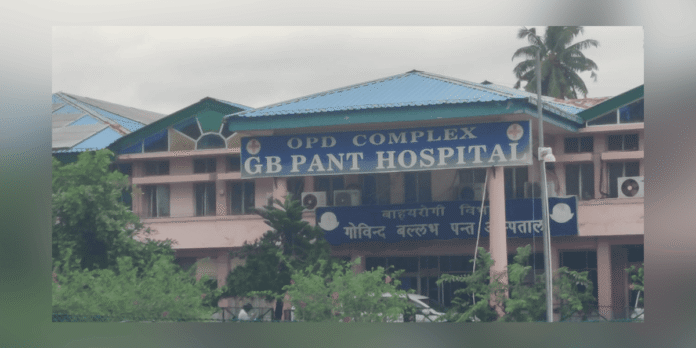
Sri Vijaya Puram, Oct. 01: G.B. Pant Hospital, ANIIMS, has begun implementing a series of measures to strengthen sanitation, hospital upkeep and patient registration following Lieutenant Governor Dr. Dinesh Sharma’s recent inspection of the facility, with authorities introducing tighter daily monitoring of cleanliness and a more structured registration system across six counters.
The measures follow Dr. Sharma’s September 27 inspection of the hospital, during which he reviewed medical services, interacted with patients and attendants and issued time-bound directions covering essential medicines, diagnostics, equipment, doctors and patient amenities. The inspection had also brought attention to basic hospital conditions and the need to improve the overall experience of patients visiting the Islands’ principal government hospital.
According to the Administration, the sanitation, cleanliness and overall upkeep mechanisms at G.B. Pant Hospital have now been further strengthened to ensure a cleaner, more hygienic and patient-friendly environment.

The existing sanitation and hospital upkeep checklists have been upgraded to provide a more comprehensive system for monitoring cleanliness, hygiene, sanitation and general maintenance across different sections of the hospital. The revised checklists are intended to ensure that routine upkeep activities are systematically recorded and monitored rather than being addressed only when deficiencies are reported.
The monitoring mechanism has also been strengthened through daily reviews of sanitation and hospital upkeep. Regular inspections are being conducted to check compliance with prescribed standards and identify deficiencies requiring corrective action.
The Administration said the hospital’s existing patient feedback mechanism would continue to serve as an important channel for identifying problems related to cleanliness, sanitation and hospital services. Feedback from patients and attendants will be reviewed for corrective action and further improvement in service delivery.
The renewed focus on sanitation comes against the backdrop of the Lieutenant Governor’s recent inspection, when patient amenities and hospital conditions were among the issues reviewed. During the inspection, Dr. Sharma had called for improvements in waiting areas, including adequate seating, fans and drinking water, while also directing officials to examine the feasibility of a patient-attendant residence within the hospital premises.
Alongside sanitation reforms, the hospital has also streamlined its patient registration process by assigning specific categories of patients to six registration counters.
Counter No. 1 has been designated for inter-island referred patients, patients requiring medical examination, pregnant women, dialysis and chemotherapy patients, as well as patients who have completed online registration.
Counter No. 2 will cater to senior citizens, hospital staff, persons with disabilities and children. Counter Nos. 3 and 4 will handle new registrations for female and male patients respectively, while Counter Nos. 5 and 6 will handle revisit registrations for male and female patients.
The restructuring is aimed at reducing congestion and improving the movement of patients through the registration area by separating categories according to their needs.
A significant component of the new registration system is the integration of ABHA (Ayushman Bharat Health Account) facilities at all six counters. Patients have been encouraged to carry their ABHA cards when visiting the hospital.
The ABHA facility enables digital identification and registration and allows health records to be linked with the Hospital Management Information System (HMIS). According to the Administration, the system is expected to support more efficient management of patient records and queues while facilitating access to healthcare information.
For residents of the Andaman and Nicobar Islands, where patients from distant islands frequently travel to Sri Vijaya Puram for specialised treatment, an efficient registration and hospital information system could have particular significance. The hospital serves not only residents of South Andaman but also patients referred from other islands, making the management of patient flow an important component of service delivery.

The Administration’s latest measures also come shortly after Dr. Sharma’s visit to Shaheed Dweep, where healthcare and public-service gaps were among the concerns raised by residents. During that visit, the Lieutenant Governor reviewed the Primary Health Centre and took note of demands for an ultrasound facility, an ambulance and completion of a 10-bedded ward. He also directed that cleanliness and pending repairs at the health facility be addressed.
At G.B. Pant Hospital, the Lieutenant Governor’s earlier directions went beyond sanitation and registration. He had directed officials to maintain adequate stocks of essential medicines, revive the Public Medicine Center, expedite procurement of unavailable laboratory equipment and restore the non-functional MRI facility. He also called for strengthening cancer and cardiology services, repairing defective ventilators and increasing the number of junior doctors.
The Administration has now indicated that the immediate emphasis is on ensuring that basic hospital systems function consistently, with sanitation and patient registration being brought under more structured monitoring.
The effectiveness of the measures, however, will ultimately depend on their regular implementation at the ground level. For patients and attendants, improvements in cleanliness, shorter registration queues, accessible medical records and responsive feedback mechanisms are among the most visible indicators of whether the hospital reforms translate into better day-to-day services.
With G.B. Pant Hospital serving as a critical referral centre for Islanders, the latest measures mark another step in the broader effort to strengthen public healthcare infrastructure and patient services across the Union Territory.