The Andaman and Nicobar Islands witnessed a day of large-scale celebrations on December 10 as two major departments, the Directorate of Information, Publicity & Tourism and the Directorate of Art & Culture, organised events to mark Deepavali’s inscription into UNESCO’s Representative List of the Intangible Cultural Heritage of Humanity. The programmes, held across Netaji Subhash Chandra Bose Island and the Andaman Club in Sri Vijaya Puram, highlighted the cultural, spiritual and historical significance of the festival while showcasing its enduring relevance in contemporary society.
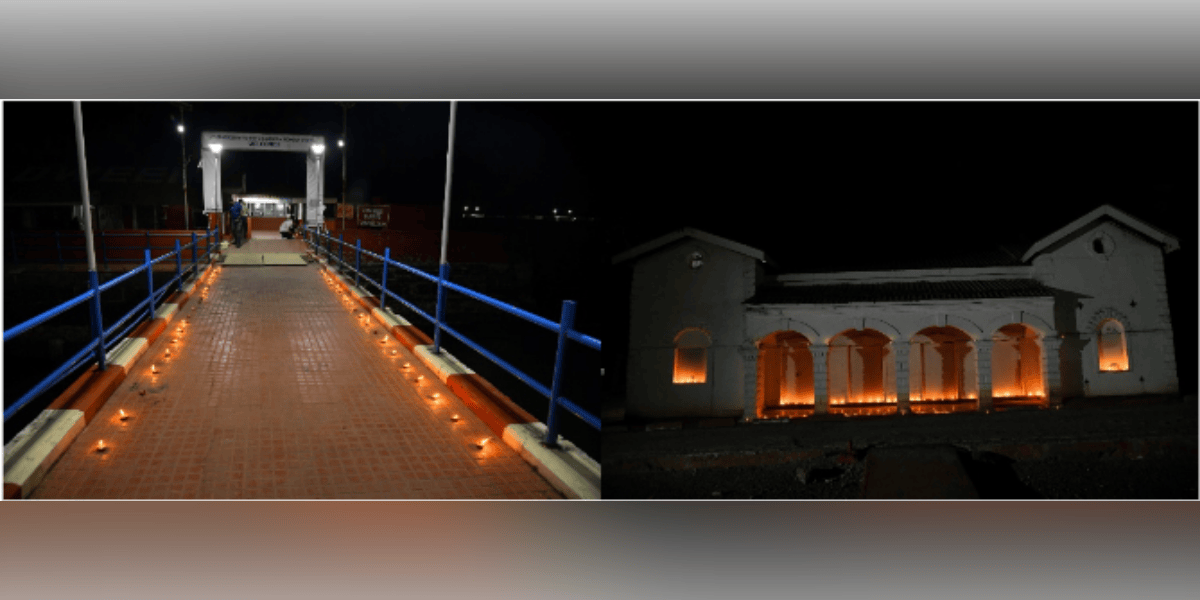
Earlier this month, the 20th Session of UNESCO’s Intergovernmental Committee for the Safeguarding of the Intangible Cultural Heritage in New Delhi formally inscribed Deepavali, recognising the festival’s universal symbolism of light, knowledge and harmony. To commemorate the moment, the Tourism Department organised a symbolic illumination of earthen lamps at heritage monuments of NSCB Island. The gesture was intended to reflect the festival’s message of hope and unity while drawing attention to its newly affirmed global significance. Across the island, rows of diyas created a serene visual landscape, adding to the celebratory atmosphere and drawing participation from visitors, residents and officials.

The lighting ceremony focused on presenting Deepavali not only as a cultural tradition but also as a heritage asset capable of strengthening the islands’ cultural identity. Tourism officials highlighted the purpose of the illumination as a tribute to the festival’s international recognition and as an opportunity to encourage responsible cultural tourism surrounding local heritage spaces. Monuments, pathways and historic structures were lit up with earthen diyas, drawing attention to the timeless customs associated with India’s widely observed festival of lights.
Parallel celebrations were organised by the Directorate of Art & Culture at the Andaman Club, where a cultural evening drew large attendance. The programme showcased traditional dance performances, a rangoli contest and a vibrant display of lamp-lighting, presenting Deepavali’s diverse artistic expressions. Organisers emphasised that the inscription serves as a reminder of the festival’s embedded values and its reflection of India’s intangible heritage. The event blended performances by state associations, local cultural groups and individual artists, creating a festive environment aligned with the spirit of the UNESCO recognition.
A highlight of the cultural event was the prize distribution for the inter-collegiate rangoli competition, where teams from local educational institutions were awarded for their designs. Participants from Tagore Government College of Education, the School of Nursing, Jawaharlal Nehru Rajkeeya Mahavidyalaya and the Industrial Training Institute at Dollygunj were recognised for their entries, adding a competitive yet celebratory edge to the evening. Organisers expressed that such engagements help reinforce youth participation in heritage-linked cultural activities.
Officials at the event described the UNESCO inscription as a significant moment for the country, interpreting it as an international acknowledgment of values that have shaped Indian society for centuries. They underlined that the recognition elevates Deepavali’s standing within global cultural discourse while reinforcing India’s responsibility to preserve traditions that represent harmony, inclusivity and spiritual continuity. The festival, long celebrated across regions and communities, was presented as an emblem of cultural unity that transcends geographical and social divides.

Beyond the indoor celebrations, heritage structures across the islands, including the National Memorial Cellular Jail, NSCB Island, Andaman Club and other historic sites, were illuminated with lamps and lights. The widespread participation represented a collective gesture of pride and cultural solidarity, marking the islands’ involvement in a milestone moment for India’s intangible heritage.
By merging illumination ceremonies with artistic showcases and public participation, the Andaman and Nicobar Islands positioned Deepavali’s UNESCO inscription as both a cultural triumph and an opportunity to strengthen local engagement with heritage. The day’s events reflected a shared enthusiasm across departments and communities, reinforcing the islands’ commitment to celebrating and preserving the cultural traditions that define India’s diverse heritage landscape.