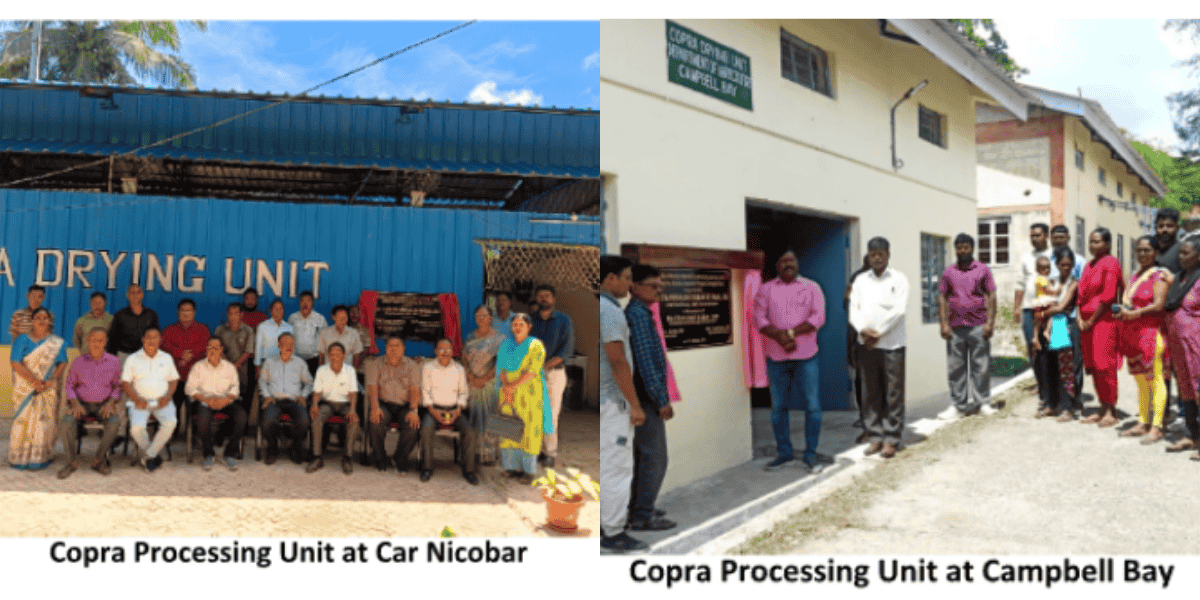
In a major step toward strengthening the coconut-based rural economy, the Andaman & Nicobar Administration has inaugurated four new Copra Drying and Processing Units across the Nicobar and South Andaman districts. The units were launched virtually by Chief Secretary Dr. Chandra Bhushan Kumar, IAS, in the presence of senior officials including Commissioner-cum-Secretary (Agriculture) and Deputy Commissioners from South Andaman and Nicobar.
The new facilities, set up at Progeny Farm, Rama Krishna Pur (Little Andaman); Multipurpose Farm, Perka (Car Nicobar); Multipurpose Farm, Kamorta; and Industrial Estate, Joginder Nagar (Campbell Bay), mark a significant expansion of local agri-processing infrastructure. The initiative aims to enhance copra production quality, reduce post-harvest losses, and enable farmers to access better market prices.
Addressing the event virtually, the Chief Secretary said the project represents a vital milestone for the farming community and called for close monitoring, safety adherence, and systematic management of the units. He emphasized the importance of handholding support, regular tracking of electricity consumption, and capacity-building of operators to ensure the long-term sustainability of the initiative. He urged officials to maintain all safety protocols and adhere to the Standard Operating Procedures while running the units.
The Agriculture Department briefed that each unit has been equipped with modern copra dryers with an installed capacity of 2,000 nuts, along with vacuum packaging machines to ensure better preservation and quality control. The department has been directed to ensure monthly reporting on production outputs, monitor efficiency, and explore additional byproducts such as coconut sugar for income diversification.
The Commissioner-cum-Secretary (Agriculture) underlined the department’s focus on branding and packaging, encouraging farmer collectives to engage in value addition and marketing. At the same time, the Deputy Commissioner of Car Nicobar informed that the local community is being encouraged to form Farmer Producer Organizations (FPOs) to take collective ownership of the copra units and ensure equitable benefits.

In Nicobar District, the virtual event was attended by senior administrative and tribal council representatives, including Chairman of the Tribal Council, Car Nicobar, and the Assistant Commissioner (HQ). A local committee has been constituted under the Assistant Commissioner to identify and support Self-Help Groups (SHGs) for managing the unit’s operations. The Secretary of the Tribal Council expressed gratitude to the Administration for setting up the unit, which is expected to improve local employment and income prospects.
At Little Andaman, the event drew active participation from local representatives, including Zilla Parishad Members, Tribal Council officials, and PACS leaders, reflecting broad community interest in the new facility. The participants noted that the project will empower small-scale farmers by enabling them to dry and process copra locally, avoiding dependence on mainland suppliers.
The inauguration of the unit at Kamorta witnessed similar enthusiasm, with representatives from multiple tribal communities and local governance bodies in attendance. Participants highlighted that the new facility could serve as a model for sustainable agriculture and small-scale enterprise in the Nancowry group of islands.
At Campbell Bay, local panchayat representatives including the Pramukh and Up-Pramukh of the Panchayat Samiti emphasized that the copra dryer and vacuum packaging machine will allow farmers from Laxmi Nagar and Govind Nagar Panchayats to produce high-quality copra, enabling them to access better prices and strengthen the local economy.
The virtual inauguration concluded with a live interaction session, during which farmers from the participating islands shared their feedback and suggestions. The event symbolized the growing integration of modern technology with traditional farming practices across the Andaman & Nicobar Islands.
The establishment of these four copra processing units is expected to create local employment, minimize wastage, and promote self-reliance in agri-based livelihoods. By combining infrastructure development with skill support and community ownership, the Administration aims to lay the groundwork for a more sustainable and value-driven coconut sector across the islands.