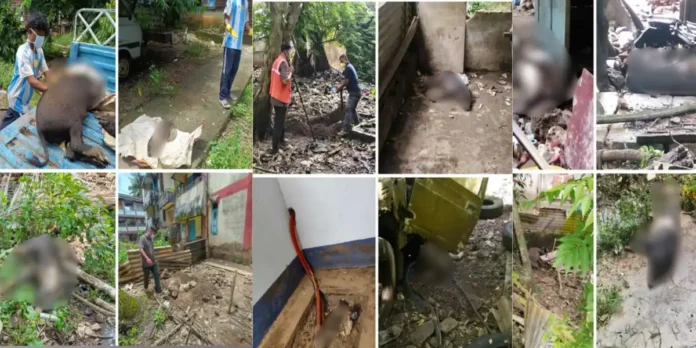
Sri Vijaya Puram, Oct. 7: The outbreak of disease that has caused continuing pig deaths across Car Nicobar has been confirmed as Classical Swine Fever (CSF), prompting the Andaman and Nicobar Administration to intensify surveillance, vaccination, reporting and biosecurity measures to contain the spread.
Samples collected by the Department of Animal Husbandry and Veterinary Services (AH&VS) were tested at designated laboratories on the mainland, confirming the viral disease among pigs in Car Nicobar. The department said previous outbreaks of Classical Swine Fever in the Union Territory had been reported between 2000 and 2003.
The confirmation comes days after The Wave Andaman reported continuing pig deaths across all 15 villages of Car Nicobar and highlighted a demand by Member of Parliament Bishnu Pada Ray for an urgent scientific investigation into the cause of the mortality, disease-containment measures and compensation for affected tribal families.
In his September 30 letter to the Chief Secretary, Ray had said pigs of different age groups had been dying through August and September. Village Tribal Captains, including the Chief Captain of Car Nicobar, had reportedly brought the issue to the notice of the Veterinary Department and District Administration. Photographs of dead pigs from some affected villages were also enclosed with the representation.
At that stage, the cause of the deaths had not been established. Ray had specifically sought clinical examination, laboratory diagnosis, pathological examination and appropriate sample testing by qualified veterinary and disease-control experts, cautioning against presuming a particular infection without laboratory confirmation. The subsequent laboratory confirmation of CSF now establishes the disease responsible for the reported outbreak.

Earlier Concerns Over Treatment And Losses
The earlier TWA report had also highlighted concerns over the reported treatment of affected pigs. According to Ray’s letter, some animals had mainly been treated with antibiotics without the desired results. The MP had pointed out that antibiotics would not be effective against viral diseases and had called for specialised veterinary intervention rather than continued treatment without establishing the underlying cause.
The issue has significance beyond animal health because pig rearing is closely linked to household food security and livelihood in Car Nicobar. Ray’s representation stated that pigs are an important traditional food source and livelihood asset for the island’s tribal community. It said families reportedly maintain around 25–30 pigs across the 15 villages, with the estimated value of an individual pig ranging from Rs 30,000 to Rs 40,000 depending on weight.
The MP had also pointed out that a comprehensive enumeration of affected animals and deaths had not been completed, leaving the scale of the economic loss uncertain. He had sought compensation or ex-gratia assistance for affected tribal families based on verified mortality and assessed losses under applicable rules and schemes.
With the disease now confirmed, the immediate priority has shifted towards preventing further transmission and protecting healthy pig populations.
CSF Does Not Pose Direct Human Health Risk
The AH&VS has clarified that Classical Swine Fever is a highly contagious viral disease affecting pigs. It does not infect humans, cattle or goats and therefore poses no direct risk to human health.
However, the disease can cause serious illness and deaths among pigs, potentially resulting in significant losses for farmers and households dependent on pig rearing.
The department has stressed that timely vaccination, prompt reporting and strict biosecurity are essential to disease control. Veterinary teams will undertake surveillance, vaccination and sample collection, while pig owners have been asked to cooperate with the departmental teams.
Sick Animals To Be Isolated
As part of the containment measures, owners have been advised to immediately separate sick or suspected pigs from healthy animals. Separate feeding and drinking containers should be provided for affected animals.
Early reporting has also been emphasised. Symptoms including high fever, loss of appetite, diarrhoea, changes in skin colour, weakness and sudden death should be reported promptly to the nearest Veterinary Officer or Senior Veterinary Officer.
The department has asked owners not to wait for multiple animals to fall sick before informing authorities. Even a single suspected case should be reported immediately.
There is no specific treatment for Classical Swine Fever. However, owners have been advised to contact the nearest veterinary institution for care of sick animals, as supportive treatment may help save affected pigs.
Vaccination And Biosecurity
All eligible healthy pigs above six weeks of age should be vaccinated as advised by veterinary authorities. Farmers have been asked to extend full cooperation to vaccination and surveillance teams working in affected areas.
The department has also called for strict cleaning and disinfection of pig sheds, feeding containers, equipment and footwear. Such measures are intended to prevent the virus from being carried between premises.
Owners have been advised to provide clean drinking water and hygienic feed and keep feeding and drinking containers clean.
They have also been asked to maintain simple records of animal purchases, movements, vaccinations, illness and deaths. Such records can assist veterinary teams in tracing animal movements and monitoring the progression of the outbreak.
Newly purchased pigs should be kept separate from existing animals for the observation period prescribed by the Veterinary Officer before they are introduced into the herd.
Movement Of Pigs And Pork Restricted
The advisory has specifically warned against practices that could contribute to further transmission.
Sick or suspected pigs must not be sold, transported, exchanged or slaughtered. Pigs, pork, carcasses, equipment or potentially contaminated materials must not be moved from affected or suspected premises without veterinary permission.
The department has also advised against feeding pigs uncooked kitchen waste or pork products, which may carry infection.
Unnecessary entry into pig sheds should be restricted. Persons entering the premises should follow prescribed cleaning and disinfection precautions to reduce the possibility of carrying infection to other locations.
The safe disposal of dead pigs has also been made a key part of the response. All deaths must be reported to veterinary staff, while carcasses should be disposed of through deep burial under veterinary guidance and in accordance with prescribed precautions.
Dead pigs must not be dumped in open areas or water bodies, sold or used for consumption.

Focus Now On Containing Spread
The confirmation of CSF provides a definitive diagnosis to the issue that had raised concern across Car Nicobar since August. The earlier TWA report had called attention to continuing deaths across all 15 villages and the absence at that time of a confirmed diagnosis.
Ray had sought deployment of a specialised team comprising senior veterinary officers, epidemiologists, animal disease specialists and laboratory experts, along with a village-wise epidemiological and mortality survey, clinical and post-mortem sampling and testing at an authorised veterinary diagnostic laboratory. He had also called for biosecurity, quarantine, animal movement controls, carcass disposal and disinfection measures based on veterinary advice.
The present advisory reflects several of those disease-control requirements, including surveillance, vaccination, isolation, movement restrictions, disinfection, safe carcass disposal and prompt reporting.
The MP had also urged continuous surveillance for possible spread to other villages or livestock, while seeking that the circumstances surrounding any delay in disease investigation and control be examined and responsibility fixed if any administrative or technical lapse was established.
For now, veterinary teams will undertake surveillance, vaccination and sample collection as required. The department has appealed to pig owners and farmers to cooperate with field teams and immediately report suspected cases.
For vaccination assistance, information or reporting illness and deaths, residents can contact the nearest Veterinary Institution. The department has also provided 112 as the toll-free number for assistance.
With the cause of the mortality now scientifically established, the next challenge for the Administration will be to contain the outbreak, prevent further livestock losses and ensure that affected families receive appropriate veterinary and administrative support.