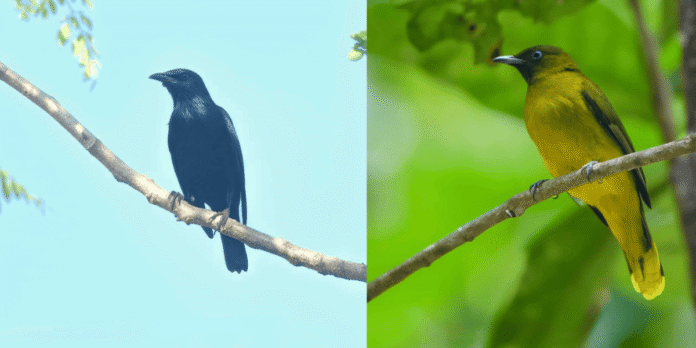
A structured bird survey conducted at the Police Lines on February 13, 2026 recorded 26 bird species and led to the campus being officially registered as an eBird hotspot, marking a notable step in local biodiversity documentation and environmental awareness initiatives.
The survey formed part of the Campus Bird Count 2026 and the Great Backyard Bird Count, with observations carried out between 0600 hrs and 0730 hrs. The programme was designed to combine environmental education, recreation and conservation awareness, and is described as the first eco-focused initiative organised at the venue.
The activity took place under the supervision of Niyati Mittal, whose guidance encouraged participation across different age groups. More than 55 participants joined the exercise, including police personnel, children and a resource expert from the Andaman Avians Club.

Participants engaged in birdwatching, documentation and basic ecological observation, reflecting a combination of citizen science engagement and community outreach. Organisers indicated that such initiatives help build awareness about local biodiversity while encouraging public involvement in conservation activities.
A key outcome of the exercise was the campus’ official registration as an eBird hotspot. The database is managed globally by the Cornell Lab of Ornithology, enabling structured submission of bird observations from across the world. Inclusion of the campus allows systematic recording of avian diversity and contributes data to global biodiversity monitoring efforts.
During the 65-minute survey, participants documented 26 bird species, highlighting the presence of varied avifauna within the campus environment. The findings underscore the ecological value of urban green spaces and their role in supporting bird populations.

Officials associated with the initiative noted that the programme aligns with broader efforts toward environmental stewardship, physical well-being and community engagement. By integrating citizen science with institutional participation, the initiative aims to promote ecological awareness while encouraging sustained conservation action.
The exercise also served an educational function, particularly for younger participants, by introducing bird identification practices and awareness of habitat conservation. Organisers emphasised that community participation remains essential for long-term biodiversity monitoring.
The initiative concluded with a conservation message centred on observation, preservation and education, reflecting the broader objective of strengthening environmental awareness through collective participation.