Guwahati, June 15: Assam has added four more products to its growing list of Geographical Indication (GI)-tagged heritage items, a development that is expected to strengthen the protection of traditional crafts and create fresh economic opportunities for artisans across the state.
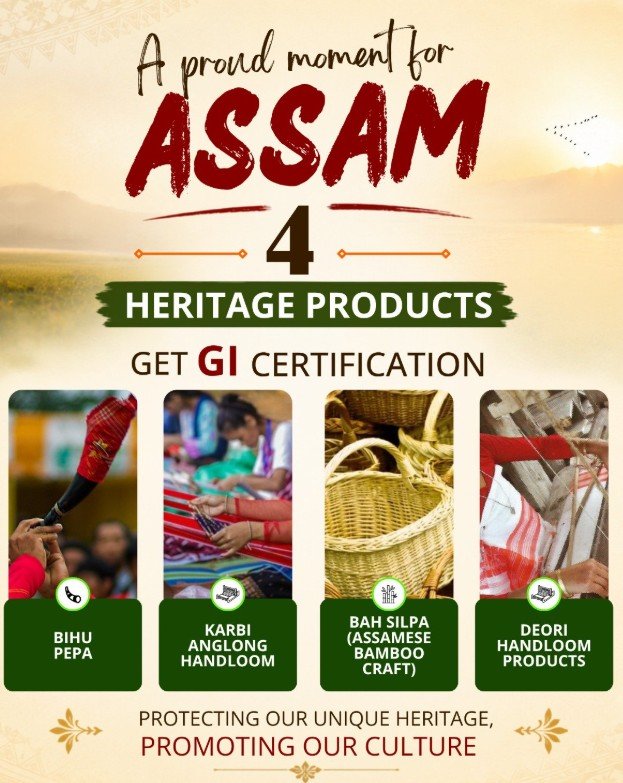
Chief Minister Himanta Biswa Sarma announced that Bihu Pepa, Karbi Anglong Handloom, Bah Silpa (Assamese Bamboo Craft) and Deori Handloom Products have officially been granted GI certification, marking another milestone in efforts to preserve Assam’s cultural and artisanal traditions.
The recognition provides legal protection to these products and formally acknowledges their unique association with the geography, craftsmanship and cultural heritage of Assam. The certification also helps distinguish authentic products from imitations in domestic and international markets.
Describing the development as a proud moment for the state, the Chief Minister said the new GI tags would contribute to safeguarding traditional knowledge and ensuring that the benefits of growing market demand reach genuine artisans and producers.
Geographical Indication tags are a form of intellectual property right granted to products whose qualities, reputation or characteristics are intrinsically linked to a particular geographical region. The certification prevents unauthorized use of product names and helps preserve the authenticity and reputation of traditional goods.
The latest additions represent some of Assam’s most recognizable cultural expressions.
Among them is the Bihu Pepa, a traditional wind instrument made from buffalo horn that occupies a central place in Assam’s most celebrated cultural festival, Bihu. The distinctive sound of the Pepa is synonymous with Bihu celebrations and has become an enduring symbol of Assamese identity.
Karbi Anglong Handloom, another newly recognised product, reflects the weaving traditions of the Karbi community. The handwoven textiles produced in the hill district are known for their unique designs, patterns and cultural significance, often serving as markers of identity and tradition within the community.
The Deori Handloom Products category highlights the rich textile heritage of the Deori tribe, one of Assam’s indigenous communities. Traditional Deori weaving is characterized by intricate craftsmanship and motifs passed down through generations, making it an important element of the state’s cultural landscape.
The fourth product, Bah Silpa or Assamese Bamboo Craft, celebrates the long-standing relationship between the people of Assam and bamboo. Bamboo has historically played an essential role in everyday life across the state, with artisans creating a wide range of household items, tools, decorative objects and cultural artefacts from the versatile material.
Experts believe the GI certification could significantly enhance the visibility and marketability of these products. Such recognition often helps producers command premium prices, access wider markets and strengthen consumer confidence in authenticity.
The move is also expected to benefit rural livelihoods, particularly in communities where traditional crafts remain an important source of income. By linking products more closely to their origin and heritage, GI tags can help create value chains that reward skilled craftsmanship while encouraging younger generations to continue traditional practices.
Over the years, various institutions and agencies have supported Assam’s efforts to secure GI recognition for its cultural products. Among them, the National Bank for Agriculture and Rural Development has played a role in facilitating initiatives aimed at promoting traditional products and improving market access for rural producers.
The latest recognition comes amid growing national and international interest in region-specific products that embody unique cultural and historical identities. Across India, GI certification has increasingly been used as a tool for preserving traditional knowledge while supporting local economies.
With four more products now added to its GI portfolio, Assam continues to strengthen its reputation as a centre of diverse cultural traditions, indigenous craftsmanship and artisanal excellence. Stakeholders believe the recognition will not only help protect heritage products from misuse but also create new opportunities for branding, tourism, exports and sustainable economic growth rooted in the state’s rich cultural legacy.