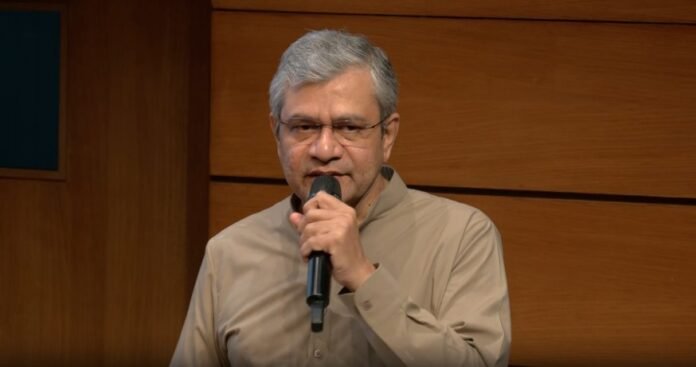
New Delhi, Oct 28: Union Information and Broadcasting Minister Ashwini Vaishnaw has rejected concerns that India’s digital data protection law could restrict journalism, asserting that the legislation preserves media freedom even as the Digital News Publishers Association (DNPA) challenges its provisions in the Supreme Court over the absence of a specific exemption for journalistic activities.
Vaishnaw said the Digital Personal Data Protection (DPDP) Act, 2023, neither requires journalists to obtain permission from individuals before reporting on them nor compels reporters to reveal their sources. The dispute centres on whether the law adequately protects news gathering, investigative reporting and the public’s right to information while safeguarding individuals’ digital privacy.
The minister said the legislation followed the Supreme Court’s recognition of privacy as a fundamental right and underwent a month-long public consultation involving industry representatives. He maintained that the law contains no provision intended to undermine journalistic freedom.

Rejecting apprehensions raised by media organisations, Vaishnaw said journalists did not need clearance from the subject of a news report before publishing it. He also denied that the Act required disclosure of the identity of a story’s source.
The government’s position comes after the Supreme Court sought its response to a petition filed by the DNPA, which represents 21 leading news organisations. The association has argued that the absence of an explicit exemption for journalism could impede the collection of information and weaken investigative and public-interest reporting.
The legal challenge brings into focus the relationship between digital privacy safeguards and the practical requirements of independent journalism, particularly when reporters investigate matters involving individuals’ personal information. The DNPA’s concerns centre on the potential consequences of applying the data protection framework to journalistic work without a clearly defined exemption.

Parliament passed the DPDP Act in August 2023, establishing India’s first comprehensive legal framework for protecting digital personal data. The law allows personal data to be processed with an individual’s consent or under specified legitimate uses set out in Section 7.
Vaishnaw’s defence rests on the position that these safeguards do not curtail the press’s ability to report freely. The DNPA, however, has asked the Supreme Court to examine the implications of the law’s lack of a specific journalistic exemption.
The court has sought the Centre’s response to the association’s petition. The competing positions place the scope of journalism-related safeguards under the digital privacy framework at the centre of the proceedings, with implications for how news organisations gather and report information while operating under the law.