The Andaman and Nicobar Territorial Congress Committee (ANTCC) on Tuesday criticised the administration’s decision to establish a deemed university in the Andaman and Nicobar Islands, alleging the move was taken against public interest and without adequate consultation with concerned groups.
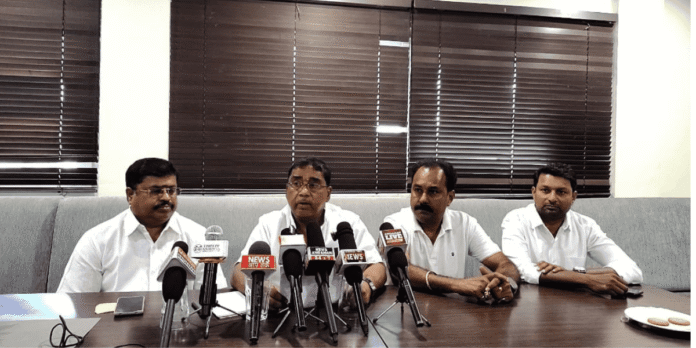
Addressing a press conference on the ongoing deemed university issue, TSG Bhasker, Chairman of the Campaign Committee, ANTCC, said the proposal had proceeded despite significant public protests. He argued that major legal and administrative decisions affecting the islands should involve wider consultation with concerned groups and public engagement.
Bhasker drew comparisons with what he described as earlier decisions, including the fixing of circle rates, which he alleged were implemented without sufficient public consultation. He said similar concerns were now being raised over the proposed deemed university.

The ANTCC leadership expressed support for student protests related to the issue. Bhasker said the demonstrations reflected concerns among students regarding the future of higher education in the islands and argued that such protests were being viewed as necessary to protect their academic prospects.
He also raised concerns about the potential impact on existing affiliations. Colleges in the islands are currently affiliated with Pondicherry University, a central university holding A+ accreditation from the National Assessment and Accreditation Council (NAAC). Bhasker said degrees from Pondicherry University carry national and international recognition and questioned the need to move away from the current system rather than addressing any existing shortcomings.
Concerns were also expressed about administrative readiness for an independent university. Bhasker questioned infrastructure preparedness, institutional capacity and the availability of qualified academic leadership, including positions such as Registrar and Vice-Chancellor. He further alleged political motivations behind the proposal and criticised Lieutenant Governor Admiral D.K. Joshi for pushing the decision without what he described as a public mandate.
Speaking at the same press conference, V.T. Tamilselvam criticised the administration, alleging that political considerations were being prioritised over public needs. He argued that the government had increasingly become a source of problems rather than solutions, citing what he described as limited debate in Parliament and the suspension of several Members of Parliament as examples of suppressed opposition voices.
According to Tamilselvam, such circumstances allow legislation, including measures concerning farmers and labourers, to be passed without adequate scrutiny. He linked these concerns to broader governance issues affecting public policy decisions.

Tamilselvam also highlighted local issues in the Andaman and Nicobar Islands, including a demand for 100 per cent local job reservation and concerns over the condition of the National Highway. He additionally referred to water rationing and ongoing electricity shortages, stating that these problems persisted despite assurances of improvement.
Referring specifically to the proposed transition of Jawaharlal Nehru Rajkeeya Mahavidyalaya into a deemed university, Tamilselvam questioned infrastructure readiness and faculty availability. He argued the move could affect transparency and educational standards and described it as an arbitrary decision with potential consequences for local students.
Tamilselvam reiterated the Congress party’s support for students protesting the proposal, stating that the party would continue to stand with them. The deemed university proposal continues to generate debate among students, political groups, and other concerned groups in the Andaman and Nicobar Islands.