The Union Budget 2026 has placed the Andaman and Nicobar Islands within a broader national roadmap for maritime growth, youth employment and coastal development, with several announcements carrying direct and indirect implications for the island economy.
With an overarching focus on long-term growth, fiscal discipline and youth-oriented development, the Budget outlined measures across shipping, fisheries, agriculture, tourism, skills and healthcare, sectors that intersect closely with the socio-economic structure of the islands. The reduction in fiscal deficit was highlighted as a sign of improved financial management, even as public spending was channelled into infrastructure and employment-linked sectors.
For the Andaman and Nicobar Islands, maritime and shipping development emerged as one of the most relevant pillars. The Centre’s push on sea route development under the national maritime framework signals continued attention to coastal and island logistics. A proposal to establish fish landing jetties is expected to strengthen basic marine infrastructure, a long-standing demand in several island regions dependent on fishing. Seaplane services proposed for Diglipur, Campbell Bay and Hut Bay could significantly alter inter-island connectivity if implemented on schedule, offering faster movement of people and potentially high-value goods while also supporting tourism circuits.

The fisheries sector received targeted support, which may particularly benefit areas like Mayabunder where fishing remains a primary livelihood. Exemption of export duty on fisheries products is aimed at boosting overseas trade, while infrastructure backing through landing jetties is expected to reduce post-harvest losses and improve market access. The emphasis on employment generation linked to marine resources aligns with the islands’ natural advantage in coastal and deep-sea fishing.
Agriculture, though limited by land availability in the islands, may see indirect benefits from the Centre’s coconut regrowth plan and recognition of coconut as a key cash crop. Coconut-based livelihoods, including copra and value-added products, form part of the rural economy in parts of the islands. The announcement of ₹20,000 loan support under a farmer-focused scheme could assist small cultivators, though its actual reach in island conditions will depend on implementation frameworks.
Tourism, described as an indirect but high-impact sector, holds particular significance for the Andaman and Nicobar Islands. With tourism identified as a major employment generator, the Budget’s provision of ₹10,000 support for tourist guides and proposals for structured training programmes could help professionalise services in a sector that already supports a wide range of local jobs. Plans to develop iconic tourist sites and improve connectivity are expected to feed into island tourism, which depends heavily on air and sea links.
Youth, skill and education initiatives outlined in the Budget also intersect with the islands’ demographic profile. Support for AVGC labs, covering animation, visual effects, gaming and comics, and promotion of content creation among students point to emerging digital opportunities that are less constrained by geography. The proposed establishment of designer institutes and construction of girls’ hostels in every district could improve access to higher and vocational education, including for students from remote island areas who often face accommodation barriers.
In healthcare, the reduction in cancer medicine prices was flagged as a relief measure, especially for patients who often travel to the mainland for advanced treatment. Broader improvements in healthcare accessibility and affordability could ease financial stress on families dealing with serious illnesses.
Industry and traditional sectors were also addressed through announcements of a mega textile project, renewed emphasis on Khadi and strengthened MSME support. While large-scale industry is limited in the islands, MSME-focused measures may benefit local enterprises in tourism services, food processing, handicrafts and marine-related trades.
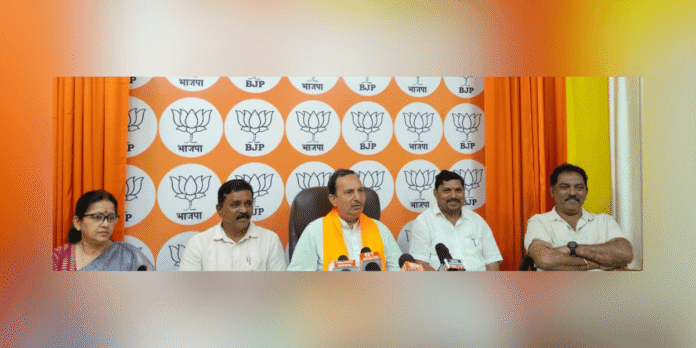
Reacting to the Budget, BJP State President Anil Tiwari said the global environment marked by wars and rising gold and silver prices had created apprehension ahead of the financial statement, but added that international observers have responded positively. He expressed gratitude to the Finance Minister, stating that the Budget has reassured both markets and citizens.
Overall, the Budget positions maritime activity, fisheries and tourism as key growth drivers for the Andaman and Nicobar Islands, with youth-focused schemes and connectivity projects forming the backbone of the development narrative.