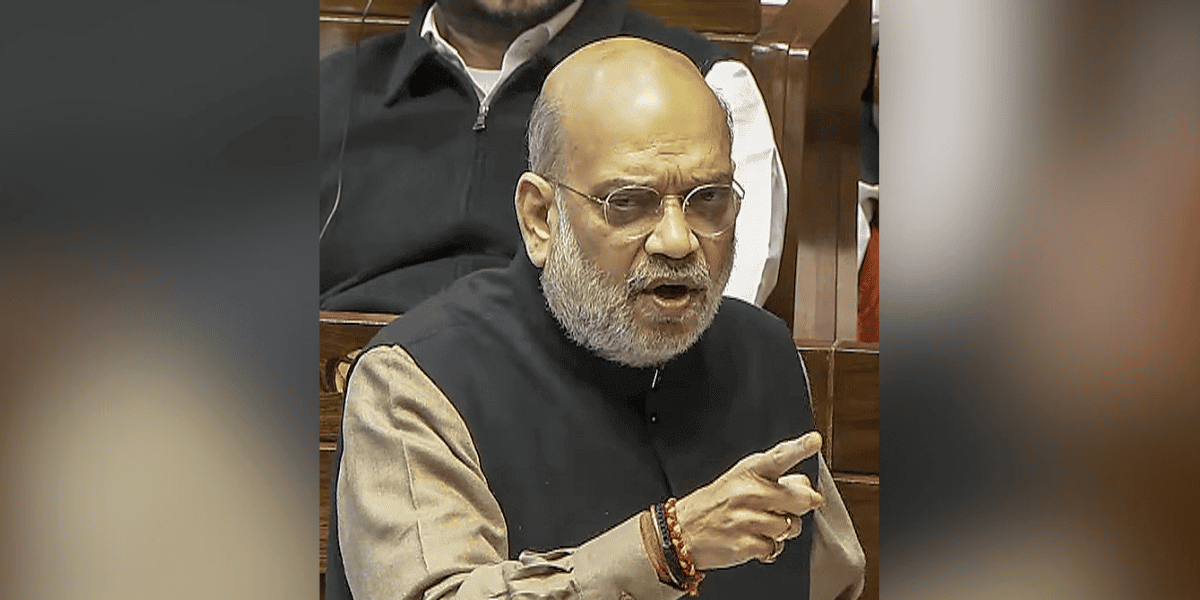
Union Home Minister Amit Shah on Tuesday said that Vande Mataram played a significant role in shaping a united national consciousness during India’s freedom struggle, becoming a rallying cry that spread across the country, including the Andaman and Nicobar Islands. He was speaking in the Rajya Sabha while initiating a discussion marking 150 years of the national song.
Shah said the composition emerged at a time when the country’s cultural institutions, including temples, art centres, libraries, and traditional systems of learning, had suffered extensive damage during colonial rule. Despite this, he said, the cultural spirit remained alive among people, and Vande Mataram helped revive and strengthen that sentiment.

He noted that Bankim Chandra Chattopadhyay’s composition quickly travelled across regions and inspired people across social backgrounds. According to him, neither the British administration nor those who embraced British cultural influences could stop its spread. Shah described the song as a catalyst that energised the freedom movement and strengthened the emotional bond between citizens and the idea of India as a motherland.
He said that discussing the history and significance of Vande Mataram would help future generations understand its contribution to the Independence movement and the values it represents. He added that such awareness could deepen their commitment to national development.
Shah also responded to objections raised in Parliament, saying the discussion on Vande Mataram was relevant not only during the freedom struggle but remains equally important for the vision of a developed India by 2047. He said the national song continues to symbolise unity, resolve and cultural continuity.

Tracing the historical context, Shah said the country endured repeated invasions and attempts to disrupt its cultural foundations long before colonial rule. He said Chattopadhyay’s composition captured India’s civilisational spirit by imagining the nation as a mother figure, a tradition that has shaped Indian thought for centuries.
He added that the slogan Vande Mataram became a powerful expression of collective resolve during the Independence movement, inspiring many who participated in the struggle. According to him, the phrase encouraged generations to remain committed to the idea of a culturally rooted and united nation.