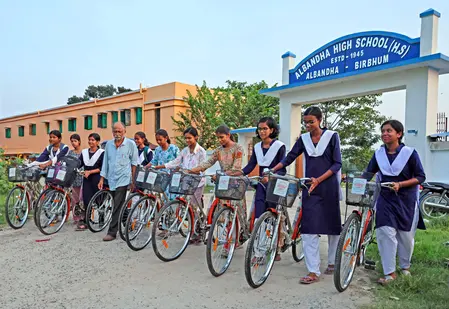
Kolkata, Nov 24: West Bengal has launched a statewide assessment of upper primary schools to identify gaps in educational infrastructure and access, while examining the possibility of merging institutions with fewer than 50 students. The exercise seeks to address an uneven distribution of schooling facilities, with some schools recording low enrolment even as children in other areas lack access to institutions within the prescribed distance.
The School Education Department has verbally instructed district-level school inspectors to collect fresh information on school infrastructure, student strength and the availability of educational facilities across their respective jurisdictions, a senior government official said on Tuesday.
The assessment follows concerns over the mismatch between the functioning of schools with very few students and the absence of adequate schooling facilities in certain locations. The government is examining whether existing institutions can be consolidated while addressing areas where children face difficulties accessing education from Classes I to VIII.

One proposal under consideration involves merging upper primary schools with fewer than 50 students into neighbouring larger institutions. However, the department’s broader assessment also aims to identify locations where the existing school network does not adequately meet local requirements.
Under the prescribed norms, primary and upper primary schools should ideally be situated within one kilometre of children’s residences. The standard has not been uniformly achieved across West Bengal, making geographical access an important component of the ongoing exercise.
The government is expected to determine area-specific interventions after receiving and examining the survey findings. These could include establishing new schools in underserved locations and upgrading existing upper primary institutions to secondary schools wherever necessary.
The proposed consolidation, however, has drawn reservations from sections of the teaching community, which have called for improvements to existing institutions before any merger exercise moves forward.

The Bengal Teachers and Education Workers Association and the All Bengal Primary Teachers’ Association have argued that the government should first strengthen infrastructure and improve enrolment in schools with low student strength rather than prioritising their merger with secondary and higher secondary institutions.
The organisations maintain that strengthening existing schools should remain a priority to preserve the quality of upper primary education. They have also argued that improving institutional capacity and student enrolment would make any future consolidation more effective.
The outcome of the statewide survey is expected to guide the government’s decisions on school infrastructure, institutional consolidation and the expansion of educational facilities in areas where access remains inadequate.