Sri Vijaya Puram, October 12: Indian Oil Corporation Limited (IOCL) has launched a new barge, MT IRIS, to strengthen petroleum transportation to the Andaman and Nicobar Islands, while the administration is exploring the deployment of four additional vessels, expanded LPG storage capacity and new distributors to improve the reliability of essential fuel supplies across the archipelago.
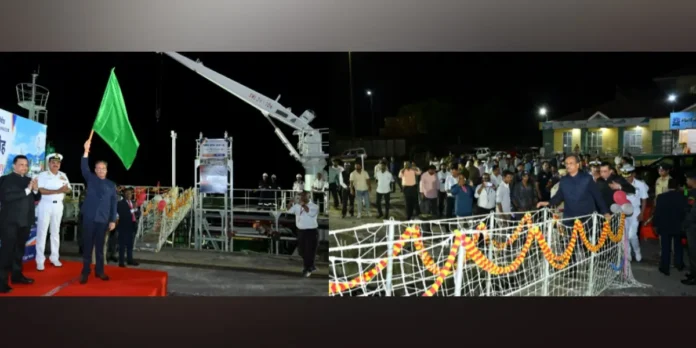
Lieutenant Governor Dr. Dinesh Sharma inaugurated MT IRIS at Sri Vijaya Puram on Sunday and flagged it off for operations. The vessel is expected to improve the transportation of petroleum products to the remote islands by enabling bulk movement instead of barrel-based transportation, reducing manual handling and associated safety risks.
The deployment is intended to strengthen the Islands’ energy security by supporting safer and more reliable fuel transportation, including under challenging weather conditions. Given the territory’s geographical spread and dependence on maritime logistics, the uninterrupted movement of petroleum products remains critical to households, transportation and essential services.
The Lieutenant Governor congratulated Indian Oil on the initiative and said the new barge would contribute to a more dependable fuel supply system for the remote islands. He also extended his wishes to the crew for safe and successful voyages.
Vice Admiral Vineet McCarty, Commander-in-Chief, Andaman and Nicobar Command (CINCAN), Indian Oil Executive Director Jitendra Kumar, other officials and members of the public attended the inauguration.

Four new vessels proposed to strengthen supply chain
In a separate meeting at Lok Niwas, the Lieutenant Governor held discussions with Kumar, Executive Director of Indian Oil’s Eastern Region and State Head of its West Bengal State Office, on measures to strengthen petroleum and LPG supply infrastructure in the Islands.
Secretary (CS&CA) Pravesh Ranjan Jha accompanied Kumar during the meeting.
The discussions covered arrangements for four new vessels to ensure the uninterrupted transportation of petroleum products to the territory. The proposed addition of vessels is aimed at strengthening maritime logistics and improving the resilience of the supply chain serving the scattered island communities.
The meeting also examined plans to augment LPG storage capacity to meet requirements of up to 90 days. Greater storage capacity could provide an additional buffer against supply disruptions arising from shipping delays, adverse weather or other logistical constraints.
Strengthening the LPG distribution network was another priority discussed during the meeting. The appointment of new LPG distributors was considered as a measure to make the Public Distribution System (PDS) for LPG more effective and improve access to supplies for consumers across the Islands.
However, no specific implementation timelines, vessel deployment schedules, storage facility locations or details regarding the proposed distributors were announced.

Focus on reliable fuel availability
The initiatives assume significance for the Andaman and Nicobar Islands, where the transportation of essential commodities depends substantially on maritime connectivity with the mainland. Any disruption in shipping or distribution can affect the availability of fuel and cooking gas for residents.
The launch of MT IRIS, alongside discussions on additional vessels, expanded storage and distribution improvements, signals a focus on strengthening multiple links in the Islands’ fuel supply chain.
The effectiveness of these measures will depend on their implementation and the ability of the expanded infrastructure to ensure consistent availability of petroleum products and LPG across remote and inhabited islands.