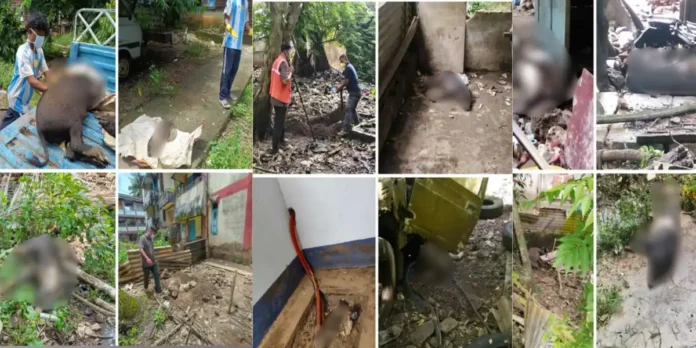
Sri Vijaya Puram, October 3: A suspected infectious disease has reportedly caused continuous deaths of pigs across all 15 villages of Car Nicobar since around August 10, prompting Member of Parliament Bishnu Pada Ray to seek an immediate scientific investigation, disease-containment measures and compensation for affected tribal families.
In a letter dated September 30 to the Chief Secretary of the Andaman and Nicobar Administration, Ray said the mortality had affected pigs of different age groups through August and September. He enclosed photographs of dead animals from some affected villages as preliminary evidence and said Village Tribal Captains, including the Chief Captain of Car Nicobar, had brought the matter to the notice of the Veterinary Department and District Administration.
Ray said the cause of the deaths should be established through clinical examination, laboratory diagnosis, pathological examination and appropriate sample testing by qualified veterinary and disease-control experts. He cautioned against presuming a specific infection without laboratory confirmation.
He also raised concern that affected animals had reportedly been treated mainly with antibiotics without the desired results. The letter said antibiotics would not be effective against viral diseases and that indiscriminate use could complicate disease management, underscoring the need for specialised veterinary intervention.

Pigs are an important traditional food source and livelihood asset for Car Nicobar’s tribal community, according to the letter. Ray said each family reportedly maintains around 25-30 pigs across the island’s 15 villages, while the estimated value of an individual pig ranges from Rs 30,000 to Rs 40,000 depending on its weight. He said the continuing deaths were therefore causing economic losses and hardship.
The MP further said a comprehensive enumeration of affected animals and deaths had not yet been completed, leaving no reliable figure on the scale of the losses.

Ray called for the immediate deployment of a specialised team comprising senior veterinary officers, epidemiologists, animal disease specialists and laboratory experts. He sought a village-wise epidemiological and mortality survey, collection of clinical and post-mortem samples, and testing at an authorised veterinary diagnostic laboratory.
He also urged the Administration to implement biosecurity, quarantine, animal movement controls, carcass disposal and disinfection measures as advised by competent veterinary authorities, alongside continuous surveillance for possible spread to other villages or livestock such as cattle and goats.
The letter sought compensation or ex-gratia assistance for affected tribal families based on verified mortality and assessed losses under applicable rules and schemes. Ray also called for an examination of the circumstances surrounding the reported delay in disease investigation and control measures and for responsibility to be fixed if any administrative or technical lapse is established.
Ray urged the Chief Secretary to personally monitor the matter and issue directions for immediate investigation, containment and relief.