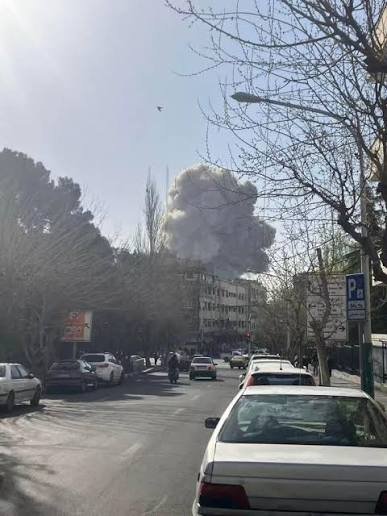
Washington, Sept. 2: The United States launched a fresh wave of strikes against targets linked to Iran’s Islamic Revolutionary Guard Corps (IRGC) on Tuesday, escalating hostilities between Washington and Tehran and raising concerns over further military confrontation in the strategically important Strait of Hormuz.
US Central Command (CENTCOM) said the strikes targeted IRGC military assets in Iran, including air defence sites, radar systems, maritime assets, mine-laying capabilities and communications facilities. The command said the operation followed recent attempted attacks by the IRGC against commercial shipping in the Strait of Hormuz and against US service members deployed in the region.
US President Donald Trump subsequently warned Iran against retaliating, saying that any response from Tehran would trigger a stronger US military action.
Trump described the strikes as “large and powerful” and said they were carried out in response to what he described as Iranian attempts to add sea mines to the Strait of Hormuz, as well as missile attacks targeting a US military base in Jordan.
The latest US action follows a renewed exchange of fire between the two countries after a period of reduced military activity. The escalation has centred in part on the Strait of Hormuz, a critical international waterway through which major volumes of global oil shipments pass.
Explosions were reported in several locations along Iran’s southern coast, including Bandar Abbas and Sirik, as well as on Qeshm Island. Iranian state-linked media also reported explosions in other locations, including Jask and Chabahar.
The Iranian response has included warnings from the IRGC that the United States would regret the latest attacks. Iranian media also reported that Tehran had begun retaliatory military operations against US interests in the region, including missile and drone attacks.
The renewed confrontation has also raised concerns over commercial shipping through the Strait of Hormuz. The waterway has become a major flashpoint as both sides accuse each other of actions threatening military personnel and maritime traffic.
The US military has previously carried out operations against Iranian assets associated with the threat to shipping. Sunday’s US action targeted Iranian rocket launchers on Larak Island in the Strait, according to reports, following which Iran launched missiles towards US sites in Jordan.
Two crude oil tankers were also reported to have been struck by unknown projectiles while transiting the Strait of Hormuz on Monday, further increasing concerns about the security of commercial shipping in the area.
The renewed military confrontation has already affected energy markets. Oil prices have risen sharply amid concerns that further disruption in the Strait could affect global supplies. Reuters reported that the latest exchange of attacks contributed to a significant rise in global energy prices.
The Strait of Hormuz is particularly important to global energy markets because of the volume of crude oil and other petroleum products transported through the waterway. Any prolonged disruption could therefore have consequences beyond the immediate region.
Trump has also claimed that US forces destroyed significant portions of Iran’s radar network, including systems that Tehran had attempted to rebuild. He warned that further retaliation could result in an even more severe US military response.
Iran, meanwhile, has rejected the US justification for the strikes and warned of consequences for Washington. The IRGC has indicated that it would respond to the latest attacks, while Iranian media reported missile and drone operations against US-linked targets in the region.
The latest escalation comes as the wider US-Iran confrontation threatens to move back towards sustained military hostilities following a period of relative calm.
With both sides issuing warnings of further action, the situation around the Strait of Hormuz remains volatile. Any additional attacks on military or commercial targets could further intensify the confrontation and increase pressure on regional security and global energy markets.
The immediate scale and longer-term consequences of the latest strikes remain unclear, but the exchange marks a significant renewed escalation between Washington and Tehran.