Sri Vijaya Puram, July 29: Strengthening waste management systems across the Andaman and Nicobar Islands took centre stage on Monday as the Andaman and Nicobar Pollution Control Committee (ANPCC) launched a two-day Union Territory-level capacity-building programme designed to create a network of Master Trainers for the effective implementation of solid and plastic waste management regulations. The initiative seeks to enhance institutional and technical capabilities while supporting coordinated implementation of waste management rules across the islands.
The workshop, titled UT-Level Master Trainer Capacity Building Workshop on Operationalising Solid Waste Management and Plastic Waste Management, was inaugurated at the Training Hall of the Directorate of Disaster Management in Sri Vijaya Puram. It is being organised by the ANPCC under the Department of Science and Technology, Andaman and Nicobar Administration, in association with the Centre for Science and Environment (CSE), New Delhi.
The programme is being conducted under Phase II of the India–Norway Marine Pollution Initiative (INMPI) of the Ministry of Environment, Forest and Climate Change (MoEF&CC), Government of India. According to the organisers, the workshop aims to strengthen institutional and technical capacities for the effective implementation of the Solid Waste Management Rules, 2026, and the Plastic Waste Management Rules, 2016, as amended.

The inaugural session was attended by Commissioner-cum-Secretary, Science and Technology, Sachin Shinde, Secretary, Science and Technology, Rajanish Kumar Singh, and Director, Science and Technology, and Joint Secretary, Sri Vijaya Puram Municipal Council, Rakesh Das.
Padma Shri awardee Sunita Narain, Director General of the Centre for Science and Environment, addressed participants through a virtual session, while Programme Director Atin Biswas and the CSE team attended the event in person. The inaugural programme was also live-streamed through the SOVTECH YouTube channel.
The workshop brought together around 63 representatives from 23 stakeholder organisations, including government departments, district administrations, urban and rural local bodies, bulk waste generators, operators of waste processing facilities, non-governmental organisations, civil society organisations and self-help groups.

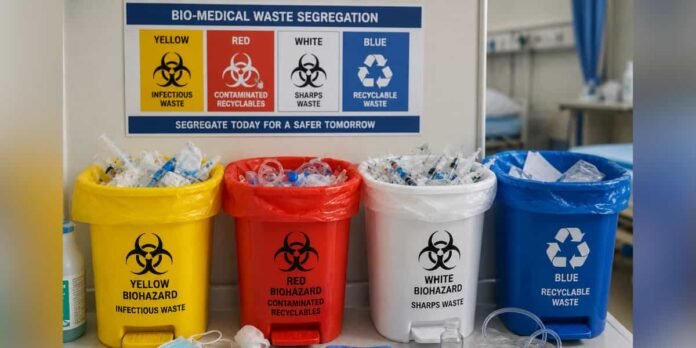
The first day’s technical sessions focused on critical components of solid and plastic waste management. Participants received training on source segregation, waste characterisation, Material Recovery Facilities (MRFs), Extended Producer Responsibility (EPR), compliance requirements for Bulk Waste Generators (BWGs), and sustainable waste management practices. The programme also included practical field exercises to provide participants with hands-on exposure to established waste management practices.
The organisers stated that the capacity-building initiative is intended to develop a cadre of Union Territory-level Master Trainers who will support knowledge dissemination, provide technical guidance and facilitate coordinated implementation of waste management regulations throughout the Andaman and Nicobar Islands.