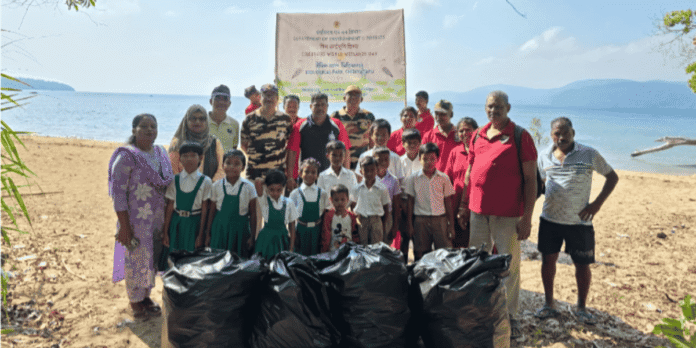
The Biological Park at Chidiyatapu observed World Wetlands Day 2026 with a series of awareness-driven activities focused on highlighting the role of traditional knowledge in wetland conservation, aligning with the official theme for the year. The programme aimed to educate students about the ecological and cultural importance of wetlands while encouraging responsible environmental practices.
As part of the observance, a beach cleaning drive was conducted with the participation of students from Primary School, Chidiyatapu, along with their teachers and staff of the Biological Park. The activity was designed to promote cleanliness, raise awareness about coastal wetland protection, and instil a sense of environmental responsibility among young learners. Students actively took part in removing waste from the shoreline, reinforcing the message of sustainable interaction with natural ecosystems.
In addition to the clean-up drive, students from Rangachang School were taken on an educational visit to a nearby mangrove wetland site. During the visit, students were sensitized to the ecological, environmental, and cultural significance of wetlands, particularly mangrove ecosystems, which play a critical role in coastal protection and biodiversity conservation.

Officials and resource persons at the site briefed the students on the functions of wetlands in maintaining biodiversity, regulating ecosystems, and supporting livelihoods. Special emphasis was placed on the importance of traditional knowledge systems in sustaining wetland ecosystems, highlighting how community-based practices have historically contributed to their conservation.
Students were encouraged to view wetlands not only as ecological assets but also as a shared natural and cultural heritage that requires collective responsibility. The interaction focused on building awareness about the long-term benefits of wetland conservation and the need to protect these ecosystems for future generations.

The programme was structured to foster early environmental consciousness among students and to strengthen understanding of conservation as a shared civic duty. By combining hands-on activities such as beach cleaning with experiential learning through field visits, the initiative sought to make wetland conservation more relatable and impactful for young participants.
Officials associated with the programme said such initiatives are essential to ensure sustained public engagement in environmental protection, particularly among schoolchildren. The observance underscored the importance of education-driven conservation efforts in safeguarding wetlands amid growing environmental pressures.
World Wetlands Day is observed annually to raise awareness about the vital role wetlands play in supporting biodiversity, climate resilience, and human well-being. The activities at Biological Park, Chidiyatapu reflected this objective by promoting informed action and reinforcing the need for community participation in wetland conservation.