The State Hub for Empowerment of Women under the Directorate of Social Welfare has organised a series of awareness programmes in South Andaman as part of its ten-day special campaign. The sessions focused on critical aspects of women’s rights, workplace safety, and the importance of education in driving empowerment.
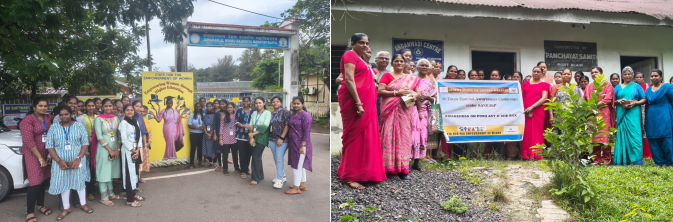
One session held at the Anganwadi Centre, Rajaji Nagar, Garacharma, centred on the Sexual Harassment of Women at Workplace (Prevention, Prohibition and Redressal) Act, commonly referred to as the POSH Act, and the SHE Box complaint mechanism. A total of 43 participants attended this programme, which emphasised legal frameworks designed to safeguard women from workplace harassment. The session highlighted how the SHE Box initiative provides a direct and confidential digital platform for reporting incidents, ensuring that women have an accessible avenue to seek redressal.
Another awareness event was conducted near Jawaharlal Nehru Rajkeeya Mahavidyalaya (JNRM) College, focusing on the role of education in women’s empowerment. With 98 participants, this programme underscored how education equips women with knowledge, skills, and confidence to make informed decisions about their lives and careers. The organisers emphasised that higher education expands opportunities for employment, leadership, and participation in public life.
Both sessions were guided by project officials including Mukhya Sevika of ICDS Urban Project, Jessy George, and gender specialists Hemlatha and Deepa Laxmi. They highlighted that empowerment extends beyond individual development to broader social, economic, and cultural progress. They stressed the need for awareness of rights and responsibilities to ensure women contribute actively to the nation’s development.
The campaign aims to bring women closer to the welfare schemes available for their benefit while addressing the barriers that prevent them from accessing resources. By linking legal awareness with educational encouragement, the initiative seeks to create a holistic approach to empowerment. Participants were reminded that informed individuals are better positioned to utilise schemes, assert their rights, and build independent lives.
Through such programmes, the Directorate of Social Welfare is positioning empowerment as both a legal and social priority. By spreading knowledge of redressal systems like SHE Box and reinforcing the value of education, the campaign connects immediate needs for protection with long-term pathways for progress.
The dual focus of the campaign has drawn attention to the importance of creating environments where women feel safe and motivated to pursue higher education. As harassment and lack of access to education remain significant challenges in many communities, the effort is expected to contribute to cultural change by raising awareness and inspiring proactive participation.
By reaching participants across different localities, the State Hub for Empowerment of Women is expanding its outreach, ensuring that information on rights and opportunities reaches diverse sections of society. The ten-day campaign will continue to cover multiple themes relevant to women’s well-being, ensuring consistent engagement with local communities.
The sessions also reinforce the broader national focus on gender equality and empowerment, complementing efforts at the local level. With growing participation, the campaign is expected to help build a culture of awareness, responsibility, and opportunity that benefits both individuals and society at large.