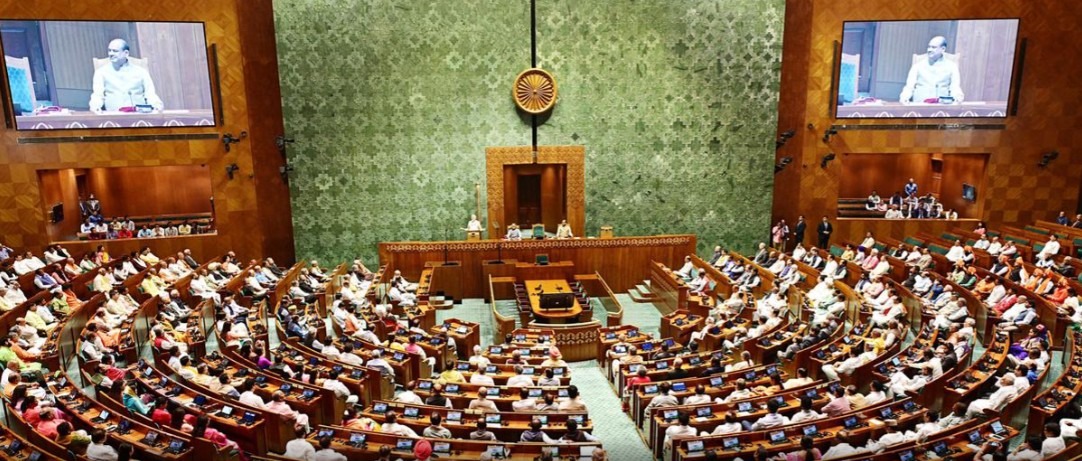
The Winter Session of Parliament concluded on Friday with both the Lok Sabha and the Rajya Sabha registering productivity levels well above 100 per cent, reflecting extensive sittings, late-night debates and the passage of key legislation despite frequent disruptions.
The 18th Lok Sabha was adjourned sine die during its final sitting, bringing to a close a session that spanned 15 sittings. Speaker Om Birla, announcing the adjournment, said the House achieved a productivity of 111 per cent, crediting members across party lines for sustained participation and cooperation. He noted that the House often sat late into the night to complete legislative business and ensure meaningful discussion on important issues.
During the session, Parliament passed several significant bills. Among them was the Viksit Bharat Guarantee for Rozgar and Ajeevika Mission (Gramin) Bill, 2025, which replaces the Mahatma Gandhi National Rural Employment Guarantee Act with a revised framework providing an enhanced guarantee of 125 days of rural employment. Another key legislation cleared was the Sustainable Harnessing and Advancement of Nuclear Energy for Transforming India (SHANTI) Bill, 2025, aimed at promoting clean energy generation with increased private sector participation.

The Lok Sabha also held debates on supplementary demands for grants, air pollution, and proposed amendments to insurance laws. The Law Minister moved motions on a range of reform measures during the session. While proceedings witnessed repeated interruptions, members from both the treasury benches and the opposition took part in extended sittings to complete the agenda.
The Rajya Sabha, which held its 269th session as part of the Winter Session, was also adjourned sine die on Friday by Chairman and Vice-President C.P. Radhakrishnan. This marked his first session presiding over the Upper House. Describing it as “very productive,” he said the House functioned for about 92 hours, achieving a productivity of 121 per cent.
According to official figures shared in the House, the Rajya Sabha recorded an average of more than 84 Zero Hour notices per day, reflecting a 30.1 per cent increase compared to the previous two sessions. More than 15 matters were raised daily during Zero Hour, marking nearly a 50 per cent rise. On five occasions, the House either sat beyond scheduled hours or skipped lunch recesses to complete pending business.

Key discussions in the Upper House included a two-day special debate marking the 150th anniversary of ‘Vande Mataram’, in which 82 members participated, and a three-day discussion on electoral reforms involving 57 members. The Rajya Sabha passed eight bills during the session, including the Water (Prevention and Control of Pollution) Amendment Act, 2024, which saw participation from 212 members. A record 59 Private Members’ Bills were also introduced.
Chairman Radhakrishnan expressed gratitude to the Prime Minister, the Leader of the House, the Leader of the Opposition and all members for their cooperation, and underlined the importance of constructive debate and the effective use of parliamentary procedures.
With the Winter Session concluding on a note of high legislative output, the next meeting of Parliament is expected during the Budget Session in early 2026.