Sri Vijaya Puram, Oct. 8: Wildlife Week activities in South Andaman have focused attention on protecting the islands’ unique biodiversity, responsible waste disposal and community participation, with awareness programmes and a beach-cleaning drive drawing students, volunteers, tourists and Forest personnel into conservation efforts.
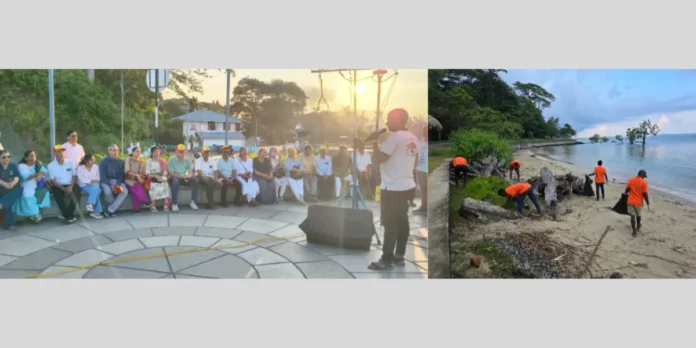
As part of the 72nd Wildlife Week celebrations, the Biological Park at Chidiyatapu, in collaboration with the Wildlife Trust of India (WTI), INTACH and the Society for Andaman & Nicobar Ecology (SANE), organised a beach-cleaning activity at Chidiyatapu. College students, SANE and INTACH volunteers, and Forest personnel from the Biological Park took part in cleaning a long stretch of the beach during the morning.
The activity underlined the need for responsible behaviour and proper waste disposal to keep beaches clean and protect the islands’ sensitive ecosystems. It also brought together community members and conservation groups for a collective cleanliness effort.

The Department of Environment & Forests also held a wildlife awareness programme at Flag Point/Marina Park, attracting tourists, visitors and members of the general public. A tableau showcasing endemic wildlife of the Andaman & Nicobar Islands became a key feature of the programme, drawing strong interest from visitors.
The display highlighted the islands’ distinctive biodiversity, including species that occur nowhere else in the world. Visitors were sensitised to the need to protect these species and their habitats and to follow responsible tourism practices.

The programme also included cultural performances by local artists. Tourists participated in the performances and shared their experiences of visiting the islands, adding an interactive element to the awareness initiative.
The activities formed part of the ongoing 72nd Wildlife Week celebrations, using public participation and direct engagement to reinforce awareness of wildlife conservation, habitat protection and responsible conduct in environmentally sensitive areas.
The combined initiatives placed conservation messaging in public spaces and brought together Forest personnel, students, volunteers and visitors, extending wildlife awareness beyond formal programmes to community and tourist settings.