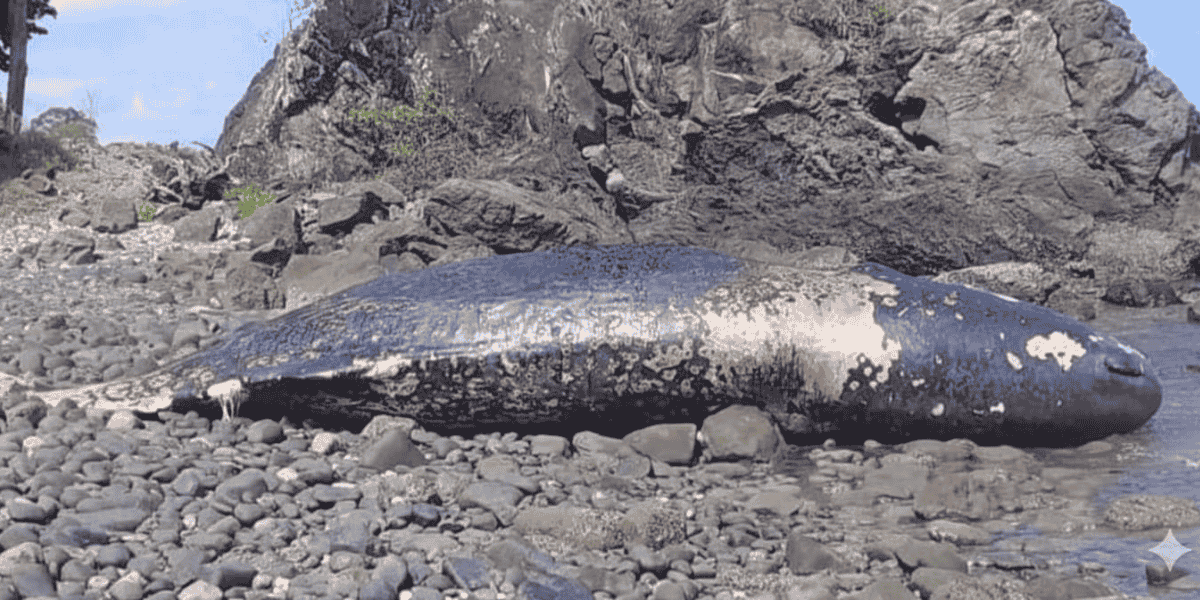
A massive whale carcass measuring approximately 9.85 meters was discovered washed ashore at Panchawati Beach on January 2, 2026, drawing attention from local residents and authorities. The animal’s remains initially drifted in the waters, with locals mistaking it for debris before it settled on the coast, emitting a strong odor and showing visible injuries.
This incident marks at least the fourth recorded stranding of a large whale in this area, highlighting a recurring occurrence in the surrounding waters. The discovery prompted community leaders to immediately alert local authorities and the Forest Department to facilitate scientific documentation and ensure proper disposal of the carcass.
Whale strandings are a recognized phenomenon in the Andaman and Nicobar Islands, which lie between the Andaman Sea and the Bay of Bengal. Steep underwater slopes in the region bring deep-sea habitats close to shore, supporting a diverse population of marine mammals, including dolphins, pilot whales, and deep-diving species like sperm whales. While the islands are not part of a regular migratory route for baleen whales, these waters serve as important feeding and movement zones for multiple cetacean species.

When whales die at sea, their carcasses may initially sink and later refloat due to the accumulation of gases from decomposition. Once at the surface, drifting is influenced by wind, tides, and ocean currents. Seasonal monsoons and rough sea conditions in the Andaman region frequently push such carcasses toward the coastline, leading to strandings on beaches, rocky shores, or mangrove-lined creeks.
Officials noted that determining the exact cause of death requires careful examination. While natural causes such as illness, injury, starvation, or old age can lead to mortality, human-related threats, including ship strikes, entanglement in fishing gear, ingestion of plastics, and underwater noise, are also considered. However, necropsy and detailed investigation can be challenging in remote island locations due to the size of the animal and logistical constraints.

Authorities handling the Panchawati Beach stranding have prioritized public safety, scientific documentation, and environmentally safe disposal. The whale’s massive weight and size have necessitated the coordination of specialized teams to prevent contamination near popular picnic and recreational spots along the coast.
Beyond immediate management, each stranding provides a rare opportunity for authorities to collect scientific data on whale presence, ocean health, and the marine ecosystem surrounding the islands. Residents and officials emphasized the importance of coordinated efforts to handle such incidents effectively while minimizing environmental and public health risks.
The recurrence of whale strandings in the Panchawati area underscores both the logistical challenges of managing large marine animals and the need for ongoing monitoring of marine wildlife in the Andaman and Nicobar Islands.