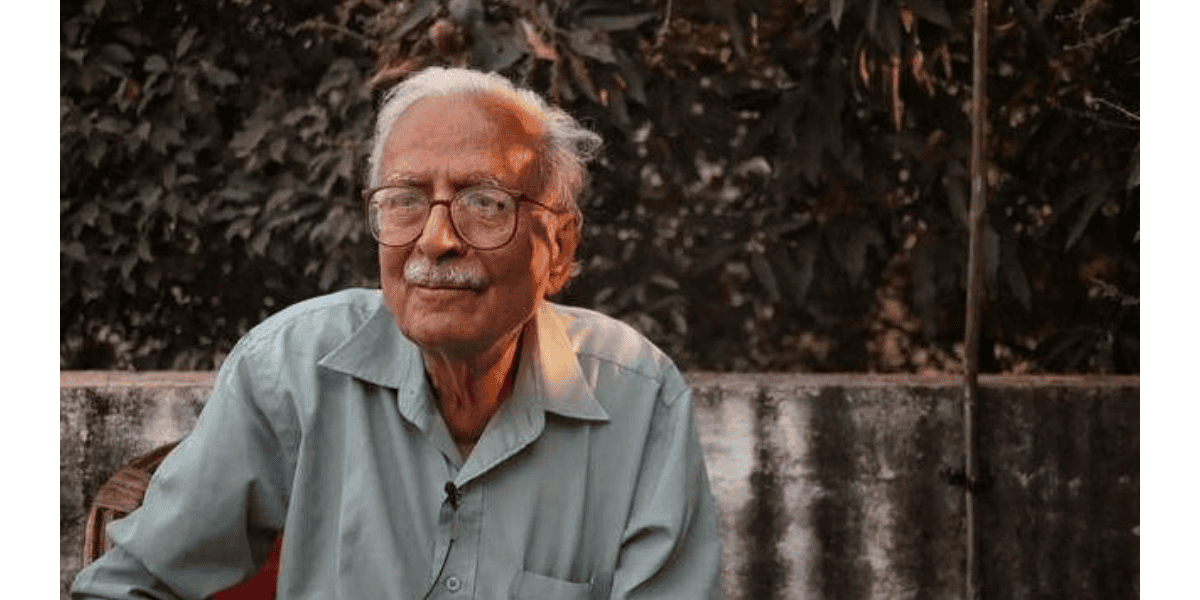
Noted Hindi litterateur and Jnanpith Award recipient Vinod Kumar Shukla was cremated with full state honours at Marwari Muktidham in Raipur on Wednesday, as Chhattisgarh bid farewell to one of its most influential literary figures whose work brought national and international recognition to the state.
Shukla passed away on Tuesday at AIIMS Raipur, where he had been undergoing treatment for multiple organ infections and age-related ailments. He was 89. According to hospital authorities, he breathed his last at 4.48 p.m., ending a literary journey that spanned more than five decades and reshaped contemporary Hindi writing.
The cremation, attended by family members, writers, artists, academicians and representatives of the state administration, was conducted with official honours in recognition of Shukla’s unparalleled contribution to Hindi literature. The Chhattisgarh government acknowledged his role in placing the state prominently on India’s literary map and in taking its cultural voice beyond national boundaries.

Born on January 1, 1937, in Rajnandgaon district, Shukla spent much of his life in Chhattisgarh, where he worked as a teacher while steadily building a body of literary work marked by originality and restraint. His writings were known for blending everyday experiences with a quiet depth, often transforming ordinary moments into profound reflections on life.
Shukla began his literary career with poetry, publishing his first poem, “Lagbhag Jaihind,” in 1971. Over the years, he developed a distinctive style that combined experimental narrative forms with simple language, earning him a devoted readership and critical acclaim. His work stood apart for its ability to evoke meaning without ornamentation, allowing silence and suggestion to carry as much weight as words.
Among his most celebrated works are the novels “Neckar Ki Kamet,” later adapted into a film by Mani Kaul in 1999, “Deewar Mein Ek Khidki Rehti Thi,” which won the Sahitya Akademi Award, and “Khilega To Dekhenge.” His literary output extended across genres, including poetry, fiction and essays, and many of his works were translated into multiple languages, bringing Indian literature to a global audience.
In 2024, Shukla achieved a historic milestone when he became the first writer from Chhattisgarh and the 12th Hindi author to receive the Jnanpith Award, India’s highest literary honour. The award recognised his unique creative vision and his lasting influence on Hindi literature.
Prime Minister Narendra Modi expressed grief over Shukla’s passing in a post on X, acknowledging his invaluable contribution to Hindi literature and offering condolences to his family and admirers.

Shukla had been admitted to AIIMS Raipur on December 2 after experiencing breathing difficulties and was later placed on ventilator support. He is survived by his wife, son Shashwat and a daughter.
As tributes continue to pour in from across the country, literary circles have described his passing as an irreparable loss. His legacy, defined by natural simplicity, understated imagination and deep humanism, is expected to endure through his writings, which continue to inspire readers and writers alike.
With his death, Hindi literature marks the close of a remarkable chapter, even as Vinod Kumar Shukla’s words remain firmly etched in the literary consciousness of India.