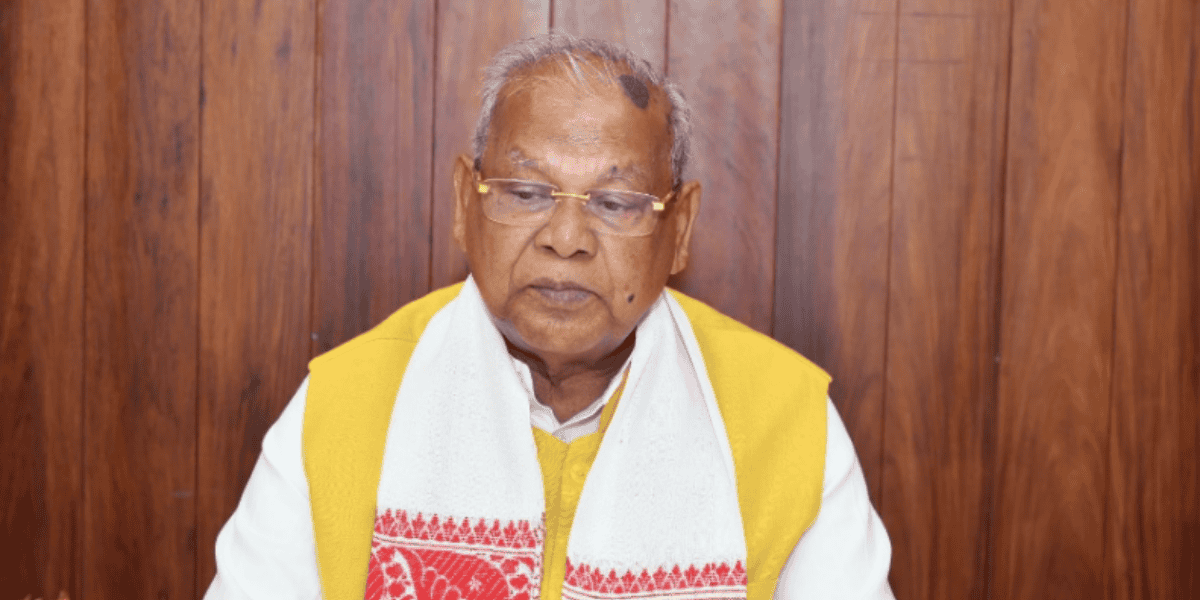
The Union Minister of Micro, Small & Medium Enterprises, Jitan Ram Manjhi, on his visit to the Andaman and Nicobar Islands, highlighted the transformative potential of the Viksit Bharat–Guarantee for Rozgar and Ajeevika Mission (Gramin) Bill, 2025, which replaces MGNREGA with a comprehensive, outcome-driven rural employment framework. Speaking to media persons, Manjhi said the Bill aims to shift from short-term wage support to long-term rural development aligned with the national vision of Viksit Bharat 2047.
The Minister emphasised the need for extensive awareness campaigns at the grassroots level to ensure that Panchayati Raj institutions, rural households, and implementing agencies fully understand the provisions of the new legislation. He stressed that effective outreach would facilitate smoother transitions from MGNREGA, ensure maximum participation, and enable villagers to leverage expanded opportunities for income security and asset creation.
Under the new Bill, guaranteed employment rises from 100 days to 125 days per rural household annually, linking wage work with the creation of durable rural infrastructure. Manjhi explained that the initiative focuses on four priority sectors: water security, core rural infrastructure, livelihood-related infrastructure, and climate-resilient works addressing extreme weather events. This integrated approach ensures public funds generate immediate employment while creating assets that support agriculture, rural enterprises, and environmental sustainability.

The Bill also strengthens decentralised planning through Viksit Gram Panchayat Plans, allowing villages to design development initiatives based on local priorities. These plans will be digitally integrated with national platforms, including the Viksit Bharat National Rural Infrastructure Stack and PM Gati Shakti, ensuring alignment between village-level projects and national infrastructure objectives.
Funding for the scheme follows a calibrated 60:40 Centre-State sharing model, with North Eastern and Himalayan states receiving 90:10 support, and Union Territories without legislatures fully funded by the Centre. Provisions for additional financial support during natural disasters and emergency situations, combined with reinforced oversight mechanisms, aim to ensure fiscal sustainability and accountability.

Operationally, the Bill guarantees 125 days of wage employment while including a 60-day no-work period during peak sowing and harvesting seasons. This balances labour availability for agriculture while preserving full entitlements for workers. By linking employment generation with productive asset creation, the legislation is expected to raise household incomes, boost agricultural productivity, and improve market access for rural communities.
Manjhi highlighted the role of MSMEs in strengthening rural livelihoods. Udyam Registration, a simple online process, provides recognition to micro, small, and medium enterprises, enabling access to credit, subsidies, skills, and market opportunities. He also cited Udyam Shreshth, an initiative supporting high-performing enterprises in scaling operations, improving productivity, adopting modern technologies, and participating in national and global value chains.
The convergence of rural employment, infrastructure development, and MSME support under the Viksit Bharat framework, according to the Minister, is intended to create sustainable livelihoods, promote entrepreneurship, and strengthen village economies, fostering holistic development consistent with Viksit Bharat 2047.