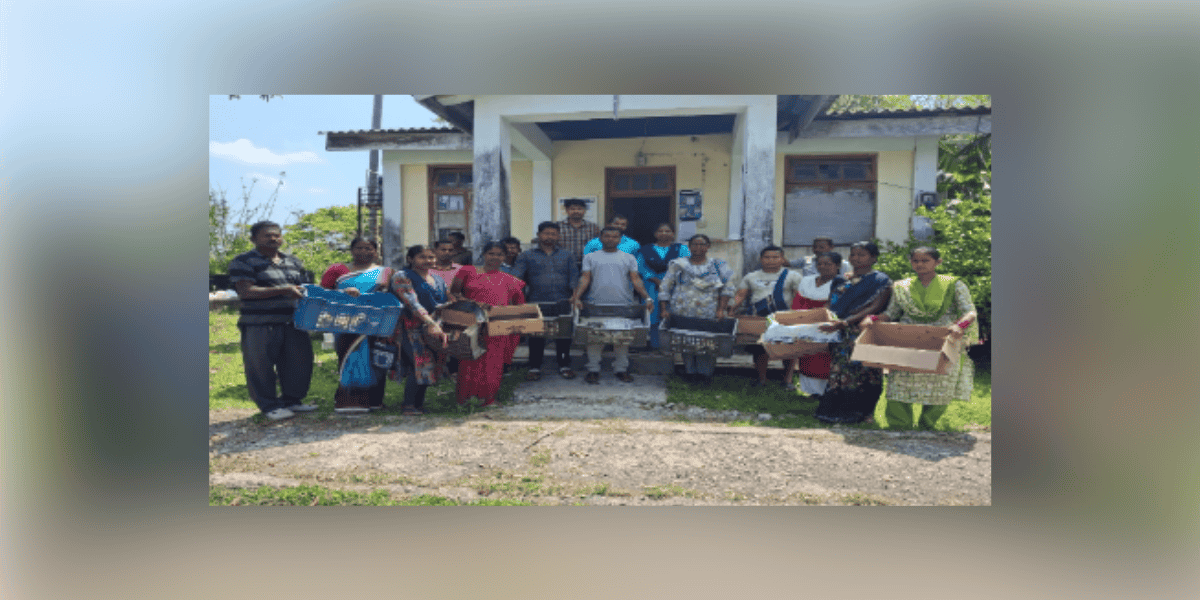
In an effort to strengthen backyard poultry farming and enhance rural livelihoods, the Department of Animal Husbandry and Veterinary Services distributed 510 Vanaraja chicks to farmers and Self-Help Group members across several villages in North Andaman.
The distribution covered progressive farmers in Pudhumadurai (Bajota), Devpur and Tugapur villages, along with members of Self-Help Groups in Rampur. The chicks were procured from the Government Poultry Farm located at Sitanagar and supplied to beneficiaries along with technical guidance on scientific poultry management practices.
Officials said the initiative is aimed at promoting backyard poultry farming as a sustainable livelihood option for rural households in the islands. Along with the chicks, beneficiaries were provided guidance on rearing practices, feeding methods, health management and biosecurity measures to ensure proper care and improved productivity of the birds.

The Vanaraja breed has been developed specifically for backyard farming conditions and is known for its adaptability and productivity. The breed is considered suitable for the island environment due to its disease resistance and ability to perform well in semi-scavenging conditions. It is also valued for its dual-purpose benefits, offering both egg production and meat yield.
Officials stated that introducing improved poultry breeds to rural households can significantly strengthen household nutrition and income security. Fresh eggs and poultry meat produced through backyard farming can supplement family diets while also creating opportunities for small-scale income generation through local sale of poultry products.
The programme is particularly designed to benefit small and marginal farmers as well as women members of Self-Help Groups who are often involved in small livestock activities at the household level. Backyard poultry requires relatively low initial investment and can be managed alongside other agricultural activities, making it a viable livelihood option in rural areas.
Authorities said the initiative forms part of the department’s broader effort to promote scientific poultry farming practices across remote and rural areas of North Andaman. By combining the supply of improved breeds with technical training and advisory support, the department aims to encourage farmers to adopt better management practices that can improve productivity and reduce disease risks.
Officials also indicated that such programmes contribute to strengthening local poultry production in the islands. Increasing poultry output at the village level can help reduce dependence on imported poultry products and improve food security in remote island communities.

Beneficiaries who received the chicks expressed interest in adopting the recommended management practices and expanding backyard poultry activities. The programme is expected to support self-employment opportunities in rural areas while also promoting participation of women and community groups in livestock-based livelihood activities.
The Animal Husbandry and Veterinary Services Department stated that it plans to continue similar distribution programmes and capacity-building initiatives across other parts of the islands. Regular training sessions and veterinary support are expected to accompany these efforts so that farmers can sustain poultry production and improve returns from livestock farming.
The department indicated that expanding access to quality livestock inputs and technical knowledge remains a key component of its strategy to strengthen the livestock sector in the Andaman and Nicobar Islands while supporting income generation in rural and remote communities.