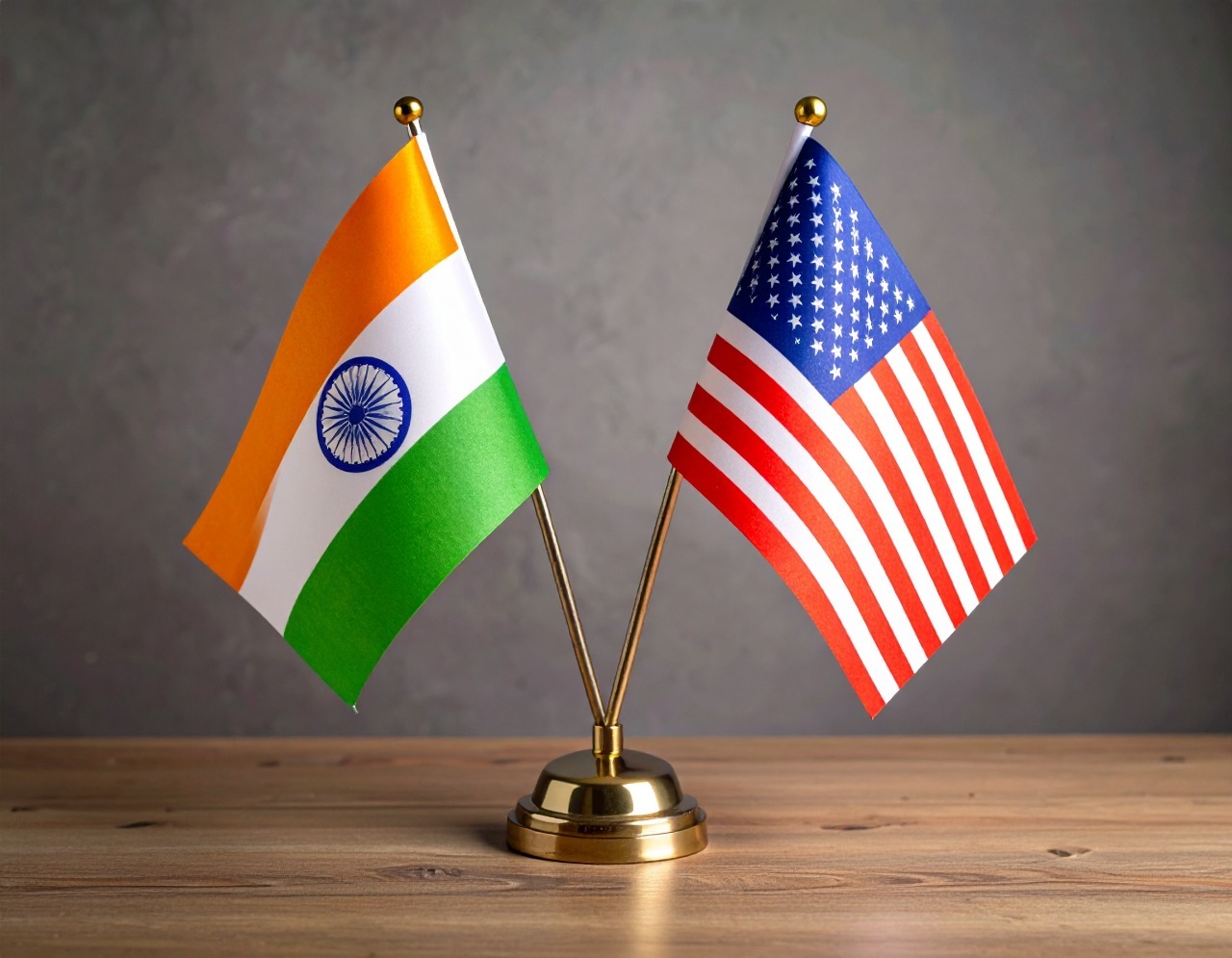
Senior United States lawmakers on Monday said India is emerging as a strategic partner for Washington in artificial intelligence, advanced manufacturing and Indo-Pacific security, moving beyond its traditional role as a defence buyer or technology market.
Speaking at a discussion hosted by the Center for Strategic and International Studies (CSIS), Representative Rich McCormick cautioned against restricting India’s access to advanced US technologies, arguing that such limits could undermine American strategic interests. He said ensuring India remains aligned with US technology standards is crucial at a time when global competition over emerging technologies is intensifying.
McCormick warned that limiting access to US-made chips and other advanced products could push India and other partners toward alternative suppliers, potentially allowing rival technologies to set global standards. He said maintaining technological alignment with India serves both economic and security objectives for the United States.

Indian American lawmaker Representative Ami Bera described artificial intelligence as a transformational technology that requires close collaboration between the two countries. He said the US and India should work closely to advance AI while jointly addressing the challenges that may arise from its rapid deployment. According to Bera, cooperation in AI also presents opportunities in sectors such as healthcare and global development.
Bera further said technology collaboration should be accompanied by discussions on talent mobility, noting the need to rethink visa frameworks to facilitate the movement of highly skilled professionals between the two countries.
Both lawmakers linked technological cooperation with deepening defence ties. Bera said defence-to-defence relations between the US and India are progressing steadily, pointing to increased co-production initiatives, joint military exercises and collaborative training programmes. He said both sides are interested in expanding these engagements.
McCormick highlighted India’s efforts to strengthen domestic defence manufacturing under its push for self-reliance, noting that New Delhi is seeking greater domestic ownership in defence production. He also criticised the pace of modernisation within the US defence industry, arguing that reliance on outdated systems could weaken competitiveness.
The lawmakers strongly endorsed the Quadrilateral Security Dialogue, or QUAD, comprising the US, India, Japan and Australia. Bera said the grouping plays a key role in maintaining balance in the Indo-Pacific, noting opposition from Beijing as an indication of its strategic importance.

People-to-people ties were also highlighted as a major asset in the bilateral relationship. McCormick pointed to the large number of Indian students currently studying in the US and warned that discouraging their presence could strengthen competing economies. Bera said talent flows are increasingly bidirectional as India’s domestic market expands, allowing professionals to move more freely between the two countries.
The discussion also addressed energy and infrastructure challenges linked to AI and data centres. McCormick said large-scale data infrastructure requires substantial power generation, while Bera pointed to India’s energy and water constraints, highlighting potential areas for collaboration in civil nuclear technology and desalination.
Both lawmakers said closer cooperation with India would enhance US competitiveness and strengthen shared strategic interests in a rapidly changing global environment.