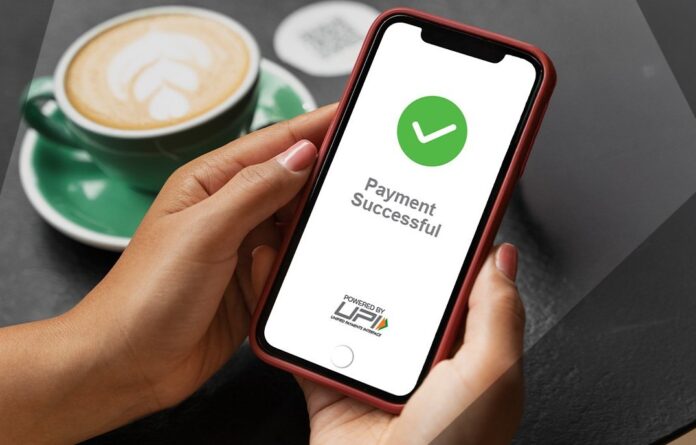
New Delhi, August 25, 2026: A decade after its launch, the Unified Payments Interface (UPI) has grown from a new digital payment system into a major component of India’s financial transactions, with annual transaction volumes increasing nearly 12,000-fold and the platform now accepted in 11 countries. Prime Minister Narendra Modi on Tuesday described the scale and reach of the system as a matter of pride for Indians.
Marking 10 years of UPI, Modi said its introduction represented a significant shift in the country’s digital payments journey. In a post on X, he urged people to share their experiences with UPI and explain how the system had affected their daily lives.
Developed by the National Payments Corporation of India (NPCI), UPI has recorded rapid growth in both the number and value of transactions since its introduction. According to an official factsheet released on Monday, annual transaction volumes increased from 2 crore in financial year 2016-17 to more than 24,162 crore in FY 2025-26.

The value of transactions also expanded sharply during the period, rising from Rs 0.07 lakh crore in FY 2016-17 to nearly Rs 314 lakh crore in FY 2025-26, representing an increase of more than 4,000 times.
The network had 741 live banks as of July 2026. During that month alone, UPI processed 2,365.8 crore transactions with a combined value of Rs 29.87 lakh crore, according to the factsheet.
The platform has also expanded beyond India. UPI is currently accepted in 11 countries, with Greece and the Maldives the latest countries to adopt the real-time payment system. It is also operational in Bhutan, Nepal, Singapore, the United Arab Emirates, France, Sri Lanka, Mauritius and Qatar, allowing cross-border digital payments.
UPI’s international scale has also placed it prominently in global real-time payments. The platform accounted for nearly 49 per cent of global real-time payment transaction volume in 2024, an achievement highlighted by the International Monetary Fund in its report, Growing Retail Digital Payments: The Value of Interoperability.

The system has continued to add authentication options. On-device authentication was introduced in 2025, allowing users to authorise UPI payments through smartphone fingerprint or face-unlock features.
Aadhaar-based Face Authentication has also been introduced to simplify UPI PIN onboarding, particularly for first-time users, senior citizens and people who have limited access to payment cards.
The expansion of UPI over the past decade has therefore combined rapid growth in transaction volumes with wider banking participation, international adoption and additional authentication methods.