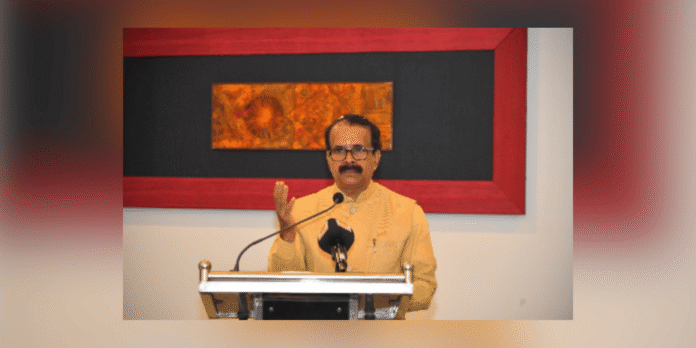
Union Minister of State for Minority Affairs and Fisheries, Animal Husbandry & Dairying, George Kurian, outlined key measures of the Union Budget 2026-27 for the Andaman & Nicobar Islands during a press conference in Sri Vijaya Puram on 15 February. The Budget, presented under Finance Minister Nirmala Sitharaman, emphasizes development tailored to the islands’ unique geography, tribal and coastal population, and economy, which is largely driven by fisheries, tourism, and coconut cultivation.
Fisheries form a core focus of the Budget. Fish caught by Indian vessels in the Exclusive Economic Zone (EEZ) and on the high seas will be exempt from duty. Amendments to the Customs Act will extend jurisdiction over fishing activities and implement safeguards to prevent misuse. These measures aim to reduce operational costs for local fishermen and promote deep-sea fishing, including high-value tuna catches, aligning with recently issued rules for sustainable harnessing of EEZ fisheries. The Budget also allows fish landed at foreign ports to be treated as exports, enabling Andaman-based vessels to offload catch at nearby international ports, saving fuel and transport costs. In addition, the duty-free import threshold for inputs used in seafood processing has been increased from 1% to 3%, benefiting processing units in Port Blair and supporting export activities.
Coconut farmers will gain support through a new Coconut Promotion Scheme, which seeks to replace old and unproductive trees with high-yielding varieties. The initiative targets increased productivity and income, while encouraging high-value crop cultivation in coastal areas. Many coconut plantations in the islands are aged, and the scheme provides direct financial support to replace senile trees, enabling farmers to enhance revenue and stabilize the local economy.

The Budget also addresses inter-island connectivity. A Seaplane Viability Gap Funding (VGF) Scheme is proposed to enhance travel between islands such as Sri Vijaya Puram, Swaraj Dweep, Shaheed Dweep, and Diglipur. Seaplanes are considered suitable for the archipelago, offering improved connectivity for residents and emergency situations, while boosting tourism. A Coastal Cargo Promotion Scheme has also been announced to shift freight to coastal shipping, reducing logistics costs and helping stabilize prices for essential commodities transported from the mainland.
Tourism and cultural heritage development are emphasized through the creation of a National Destination Digital Knowledge Grid, which will document important cultural and heritage sites, including the Cellular Jail and Netaji Subhash Chandra Bose Dweep. A pilot program to train tourist guides at iconic destinations will enhance local skills, improve service quality, and create employment opportunities for youth, researchers, and historians, strengthening the tourism sector.
Tribal welfare remains a priority, with the Budget reaffirming measures designed to ensure that development reaches Scheduled Tribes and Particularly Vulnerable Tribal Groups across Nicobar and other regions. These measures aim to improve livelihoods, access to resources, and social inclusion for indigenous communities.
Kurian stated that the Union Budget 2026-27 provides focused support across multiple sectors, including fisheries, tourism, coconut cultivation, connectivity, and tribal welfare, enabling residents of the Andaman & Nicobar Islands to participate in the broader vision of a developed India under Prime Minister Narendra Modi.
Overall, the Budget reflects a targeted approach to strengthen livelihoods, enhance infrastructure, and promote sustainable economic development while prioritizing the unique needs of the islands’ population and environment.