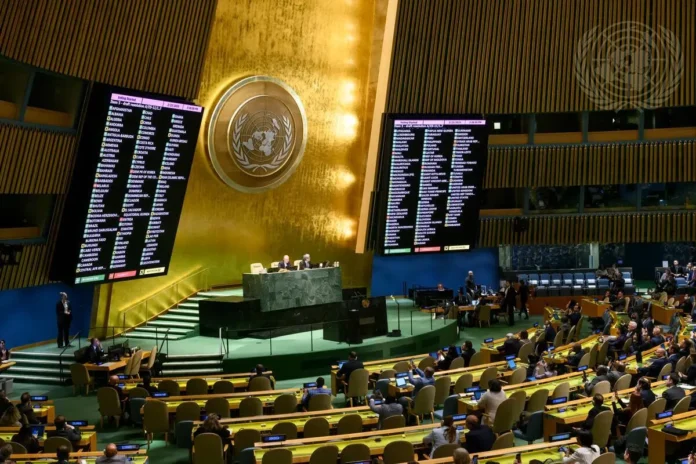
The contest for the next UN secretary-general has narrowed, following the withdrawal of nominations by the Maldives and Chile, leaving Costa Rica’s Rebeca Grynspan as the only confirmed female candidate. The developments reduce the candidate pool from five to three, highlighting global pressure to appoint a woman to head the 80-year-old organization.
The Maldives withdrew its surprise nomination of Virginia Gamba, an Argentine diplomat with senior UN experience, in a brief letter to the presidents of the General Assembly and Security Council. No reason was provided for the decision. Similarly, Chile retracted its nomination of former president Michelle Bachelet, though she remains on the ballot with backing from Brazil and Mexico.

The remaining male candidates are Rafael Grossi, the Argentine head of the International Atomic Energy Agency, and Macky Sall, former president and prime minister of Senegal, nominated by Burundi. Analysts say Grynspan, who leads UNCTAD, benefits from the global push for gender parity in top UN leadership.
Assembly President Annalena Baerbock and Security Council leadership emphasized the importance of women candidates when opening the election process last year. The Assembly resolution also notes that “equal and fair distribution” of leadership positions by gender is a desirable goal.
The withdrawals underscore the strategic dynamics in the election. Bachelet, a former UN High Commissioner for Human Rights, has faced opposition due to prior criticisms of countries including the United States and Israel. Several US lawmakers have threatened to block her election, and as a permanent Security Council member, the United States could exercise veto power if her candidacy advances.

Grossi’s candidacy is shaped by high-profile nuclear issues, including Iran and the Russia-Ukraine conflict, while Grynspan’s UNCTAD leadership avoids highly controversial stances, giving her an uncontroversial edge in the current race.
The election process will continue with three-hour interactive sessions starting April 20, during which candidates will present their vision and respond to questions from diplomats and civil society representatives. The General Assembly will require a simple majority to approve a candidate, but Security Council approval is decisive, as the UN Charter mandates the Assembly appoints the secretary-general “upon the recommendation of the Security Council.”
Nominations close on March 31. The withdrawals have intensified attention on the remaining candidates and the likelihood of a woman assuming the UN’s top post, reflecting international calls for gender-balanced leadership.
Observers note that the unfolding process is not only a leadership contest but a test of global consensus and geopolitical calculations, with permanent Security Council members holding significant influence over the final decision.