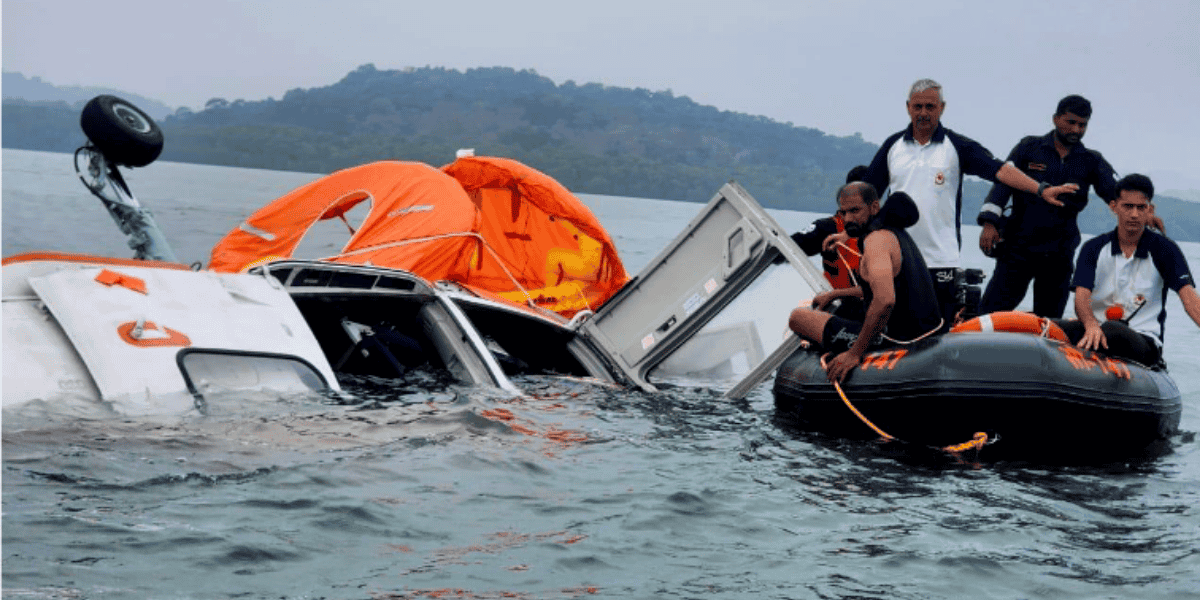
TSG Bhasker, Chairman of the Campaign Committee of the Andaman and Nicobar Territorial Congress Committee (ANTCC), has raised concerns over the medical response and evacuation process following the helicopter incident near Mayabunder on February 24, which was later linked to the death of a passenger. The helicopter, operated by Pawan Hans Limited, had reportedly made a forced landing in the sea near Mayabunder. While no immediate casualties were reported at the time of the incident, one passenger, Nambi Amma, is stated to have ingested water into her lungs during the mishap.
According to the statement issued, the passenger was shifted from Mayabunder to Sri Vijaya Puram by road ambulance on February 25. The journey along NH-4 reportedly took nearly seven hours. Bhasker has stated that the prolonged road transfer, particularly along a poorly maintained stretch, may have aggravated the patient’s condition.

Upon arrival in Sri Vijaya Puram, she was admitted to the Intensive Care Unit and placed on ventilator support. She passed away on the evening of February 27.
Bhasker has questioned the adequacy of emergency medical facilities at Mayabunder, noting its status as a district headquarters. He has sought clarification on whether the attending medical personnel at Mayabunder Hospital had the necessary qualifications and expertise to manage a patient in critical condition following a near-drowning incident.
Concerns were also raised regarding the decision to transport the patient by road rather than arranging an immediate air evacuation. Bhasker stated that if a helicopter operated by Pawan Hans was unavailable at the time, the Administration could have sought assistance from agencies such as the Indian Coast Guard, Navy or Air Force to facilitate timely airlifting.
He further questioned whether a qualified doctor had accompanied the patient during the ambulance transfer and whether the vehicle was adequately equipped with oxygen supply, monitoring systems and other life-saving equipment required for critical care during transit.
In his statement, Bhasker alleged that the sequence of decisions taken after the incident indicated a lack of preparedness and timely intervention, which he said may have contributed to the deterioration of the patient’s health. He described the episode as reflective of systemic gaps in emergency response and disaster management mechanisms in the Islands.

The ANTCC leader has demanded a thorough, impartial and time-bound enquiry into the entire sequence of events, from the immediate response at the site of the helicopter incident to the medical management and evacuation process. He has also called for accountability to be fixed if lapses are established.
Additionally, he has urged the Administration to take corrective measures to strengthen emergency medical infrastructure and evacuation systems across the Andaman and Nicobar Islands. Emphasis has been placed on ensuring that remote and district-level hospitals are equipped to handle critical cases and that air evacuation protocols are streamlined for future emergencies.