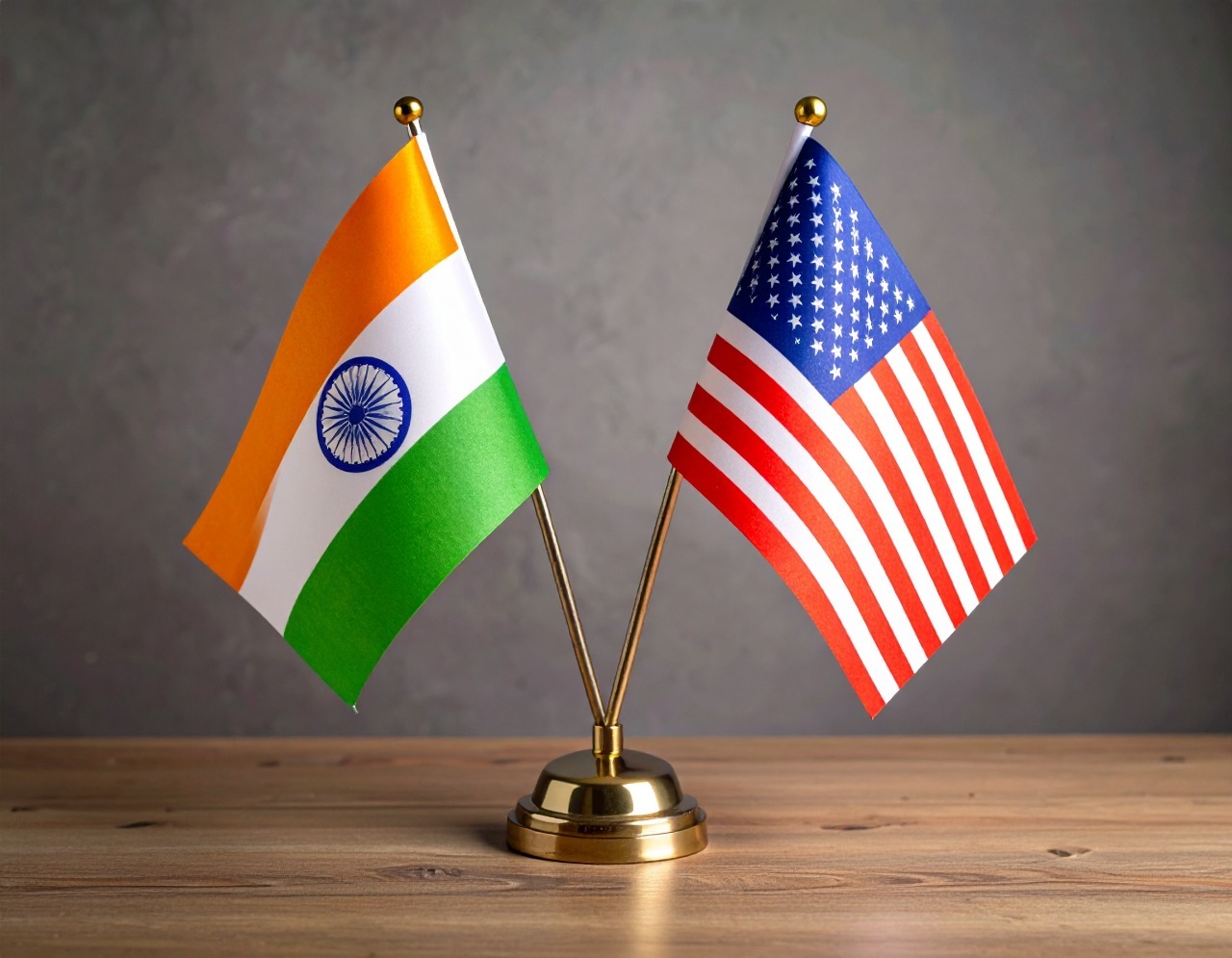
US President Donald Trump’s move to impose a 25 percent tariff on Indian imports, along with penalties for continued oil trade with Russia, has triggered sharp reactions across markets, policy circles, and industry stakeholders. But far from escalating tensions, the development is being viewed by analysts and economists as a potential starting point for renewed trade negotiations between India and the US.
According to HSBC Global Research, the Indian government’s measured response and continued commitment to dialogue indicate that both sides are willing to resolve the deadlock through mutual compromise.
“The US-India trade deal had reached advanced stages, with disagreements lingering in areas such as agriculture, dairy, and genetically modified feed,” HSBC noted. “India, given its agrarian economy, has been reluctant to fully open these sectors. But the door for negotiation remains open.”
In a sharp turn, President Trump’s administration also linked the new tariffs to India’s ongoing crude oil imports from Russia. India, which sources nearly 35 per cent of its annual $220 billion oil imports from Russia, has come under increased pressure to diversify.
HSBC’s analysis shows India has already begun pivoting. “In July, India significantly reduced its oil purchases from Russia, reversing a trend that began in 2021 when just 3 per cent of imports came from Russia,” the report said. The suggestion is clear: India may be willing to tweak its oil sourcing strategy as part of a broader trade understanding.
The bank estimates that the elevated tariff rate, if implemented, could shave off 0.3 percentage points from India’s GDP growth. The additional penalty on Russian oil imports, whose specifics are yet to be defined, could cause further drag. For context, the US has recently announced tariffs of 15 per cent on Japan and the EU, and 20 per cent on Vietnam, Indonesia and the Philippines, making the 25 per cent tariff on India one of the steepest.
Despite the geopolitical headwinds, Indian stock markets displayed remarkable resilience. The Sensex closed at 81,185.58, down just 296.28 points or 0.36 per cent, after an intraday rally buoyed by FMCG stocks. The Nifty 50 fell 86.70 points to end at 24,768.35.
“Investors focused on domestically-oriented sectors, especially FMCG, which are largely insulated from global trade turbulence,” analysts said.
Stocks of Hindustan Unilever, ITC and Kotak Mahindra Bank ended in the green, while Reliance, NTPC, and Tata Steel were among the day’s top losers. Notably, the Nifty FMCG index surged 1.44 per cent, led by solid Q1 earnings from sector leaders.
Sectoral performance elsewhere was muted. Nifty Auto declined by 89 points, Nifty IT fell 180 points, and Nifty Bank closed 188 points down. Mid-cap and small-cap indices also posted losses, reflecting broader investor caution on the monthly expiry day.
Amid the market and diplomatic recalibration, India’s business leaders chose to highlight the silver linings. Ranjeet Mehta, CEO and Secretary General of PHDCCI, said that the tariffs, while challenging in the short term, could accelerate India’s integration into global supply chains.
“Global manufacturers are already rethinking their China-heavy supply models. India has a unique opportunity to become their next base,” Mehta said. “The US move isn’t isolated, it’s part of a larger recalibration. India just needs to stay strategic.”
He added that MSMEs may face initial pressure, especially in sectors such as textiles, pharmaceuticals, and jewellery, but the long-term shift could significantly benefit the Indian economy.
Finance expert Ajay Rotti echoed the sentiment. “This isn’t a signed deal yet. Negotiations are still on. We must prioritize national interest while staying engaged in talks,” he said.
Both experts agreed that a bilateral trade agreement could be finalized within the next two to three months, which may defuse the tariff situation and lead to improved terms for India.
India’s diplomatic posture also remains calm. Government sources suggest that New Delhi is not looking to retaliate but rather to engage constructively.
As global trade winds shift under political pressure, India seems to be treading a careful line, one that mixes resilience with readiness, pragmatism with principles.
With global supply chains in flux and trade blocs being redefined, the US tariffs may well end up being not a roadblock, but a redirection toward a new kind of partnership.