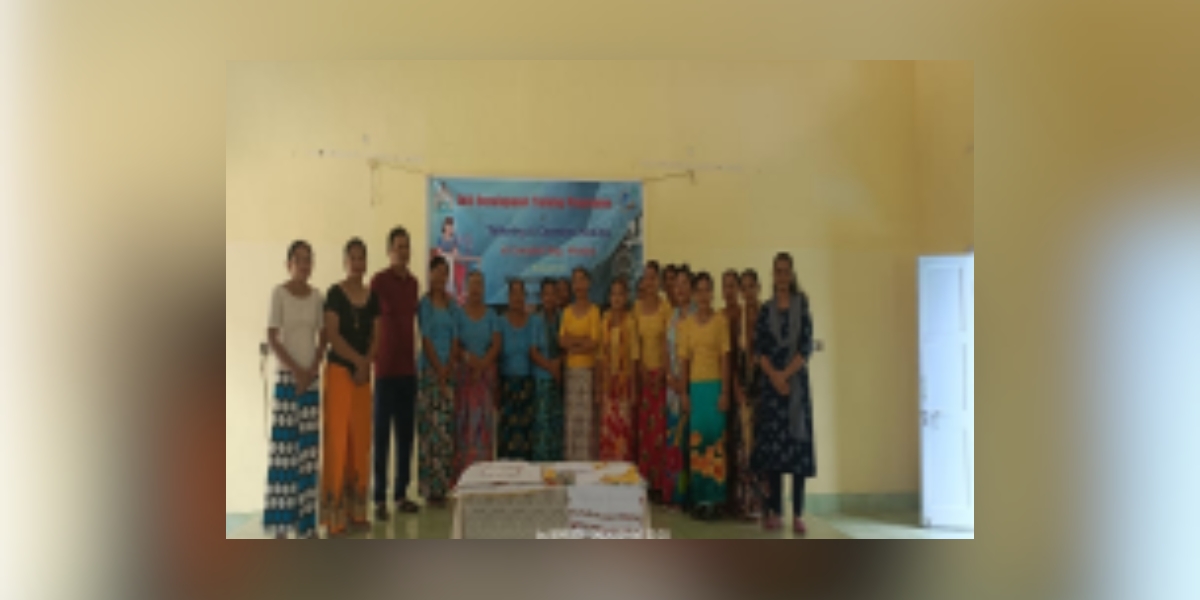
A one-month training programme in tailoring and garment making for tribal women of Great Nicobar concluded recently, marking a step towards equipping communities with essential skills for self-reliance and livelihood generation. Organized by the Industries Department, the programme took place at the Community Hall in Rajiv Nagar, Campbell Bay, from August 6, and focused on imparting both practical knowledge and confidence to participants.
The initiative was specifically designed to provide tribal women with skills that can translate into self-employment opportunities and improve their socio-economic well-being. Tailoring and garment making were chosen as focal areas due to their relevance in everyday life, low investment requirements, and potential for generating sustainable income.
Out of the 25 women enrolled, 22 successfully completed the course. Their participation was marked by enthusiasm, consistency, and determination to acquire hands-on expertise. For many of the trainees, the programme represented a first step towards financial independence, as it created avenues for contributing to household income and building community-based micro-enterprises.
During the training, participants were taught the fundamentals of garment construction, stitching techniques, use of sewing machines, measurement accuracy, fabric selection, and finishing methods. Beyond technical skills, the course emphasized aspects of design, creativity, and adaptability, elements that can help women cater to both local needs and broader markets. Practical sessions ensured that trainees gained confidence in producing wearable garments by the end of the programme.
The Industries Department structured the programme to not only impart vocational skills but also encourage an entrepreneurial mindset. The training highlighted how tailoring could become a viable small-scale business, with possibilities of supplying school uniforms, household garments, or festival attire. By developing proficiency in garment making, women are now positioned to either start independent ventures or work collectively as part of self-help groups.
This initiative also carries broader social significance. Empowering women through vocational training helps reduce economic vulnerability, enhances decision-making within families, and fosters greater participation of women in community development. In areas like Great Nicobar, where economic opportunities are limited, such programmes play an important role in bridging gaps between traditional livelihoods and modern skills.
Vocational training for tribal women is also aligned with national and local efforts to strengthen inclusive development. It supports the dual goals of skill building and women’s empowerment, both of which are critical to socio-economic progress in remote and marginalized communities. By focusing on tailoring, the programme struck a balance between practicality and market relevance.
The completion of the training has generated optimism among participants and their families. For several women, the course was not just about learning a trade but about breaking barriers to confidence and independence. Their ability to now produce garments reflects more than technical learning, it is a symbol of empowerment and resilience.
For the women of Great Nicobar who completed the course, however, the one-month programme has already sown the seeds of empowerment. With determination and continued support, their tailoring skills could well stitch together not just garments, but pathways to a more self-reliant and confident future.